Collective Trauma in the Cinema of Jafar Panahi
Panahi’s latest film is a political black comedy with a mystery at its core. Its subject is both grim and peculiar: the enduring bond between torturer and victim in the Islamic Republic of Iran.

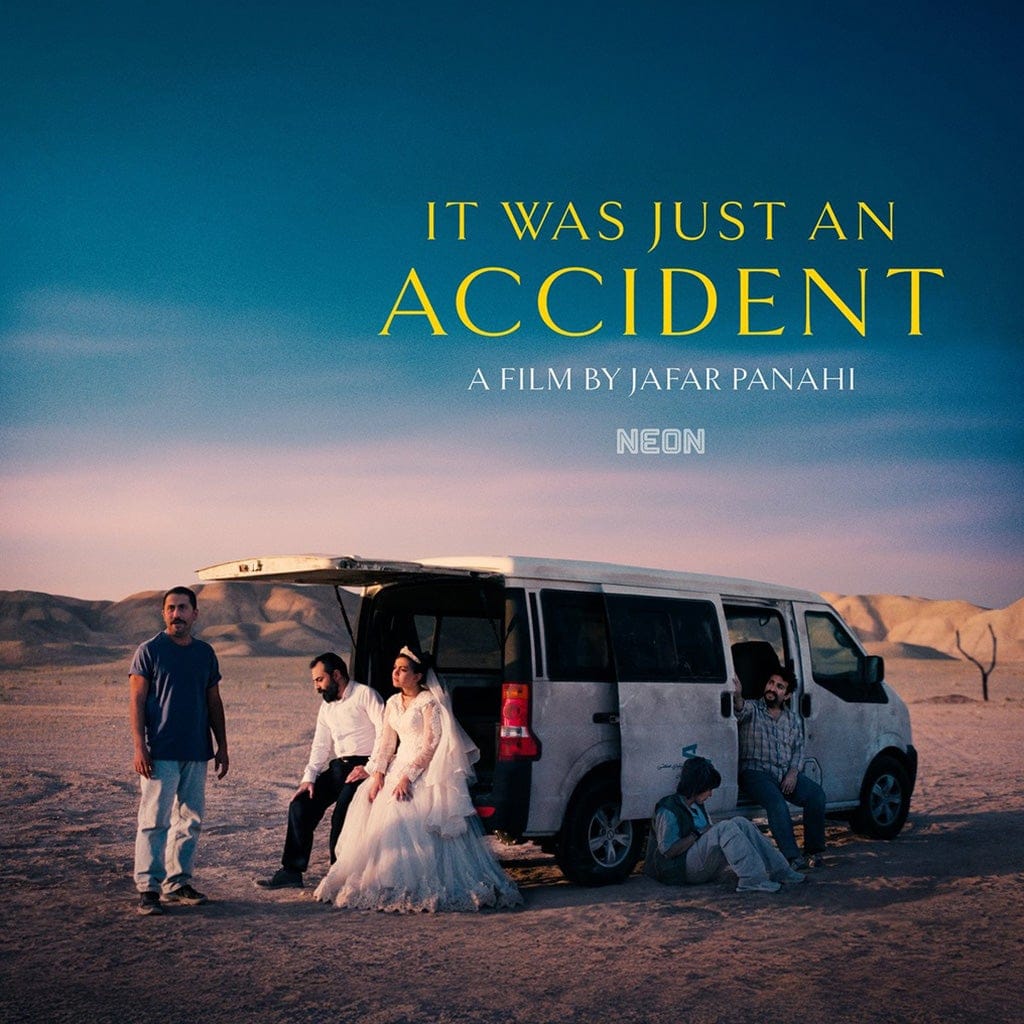
Editor’s note (March 2026): “It Was Just an Accident,” the latest film by Jafar Panahi, won the Palme d’Or at the Cannes Film Festival in May 2025 and later received four nominations at the Golden Globe Awards. Earlier this winter, the film won three major prizes at the Gotham Awards in New York: Best Director, Best Screenplay, and Best International Feature. It is now nominated for Best International Feature Film and Best Original Screenplay at the Academy Awards, with the ceremony taking place tonight.
Panahi’s latest film is a political black comedy with a mystery at its core. Its subject is both grim and peculiar: the enduring bond between torturer and victim in the Islamic Republic of Iran.
Two Periods in Panahi’s Career
Panahi’s career falls naturally into two phases, an “official” period and an “underground” one. The latter begins around 2010, when Iran’s judiciary sentenced him to prison and banned him from filmmaking.
Since then, Panahi’s works vary in polish, shaped by whatever scarce resources are available. Some look deliberately rough, even amateurish. Yet the underground period, still ongoing, is best seen as one evolving project.
Across these films run recurring themes, a frank political sensibility, and a kind of aesthetic relay race, the technical limits of one installment compensated for by the ingenuity of another. Seen as a whole, the cycle confirms what was already clear from his earlier work: Panahi is an exceptionally resourceful filmmaker.
Before his arrest and ban, Panahi had already established himself with films such as The White Balloon (1995), The Circle (2000), and Crimson Gold (2003). Working in a quasi-documentary form of neorealism, indebted to his mentor Abbas Kiarostami, Panahi sidesteps the conventional machinery of Hollywood storytelling, the tidy arcs, the brisk montage, the emphatic dramatic beats.
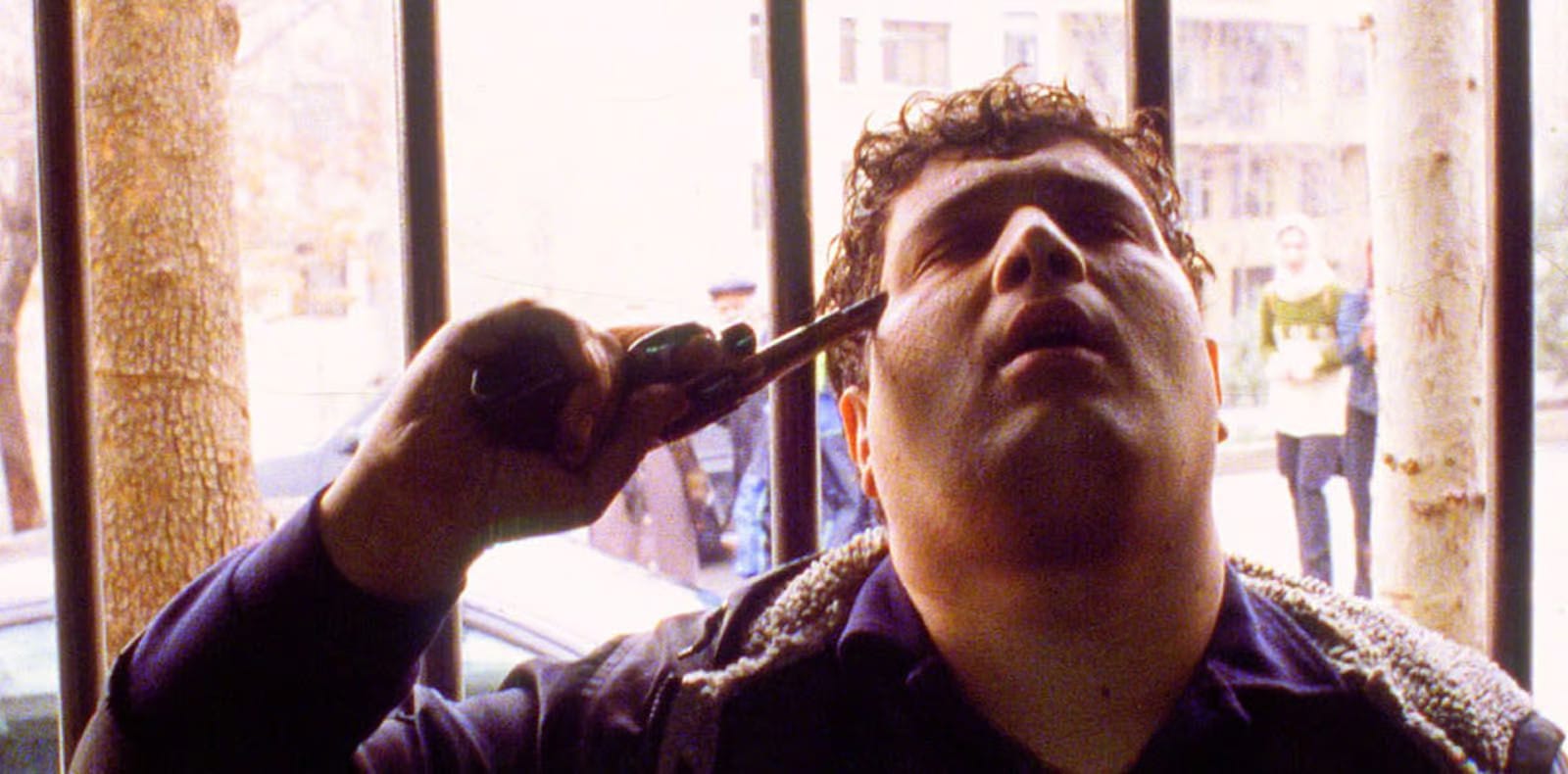
Crimson Gold, based on a story by Kiarostami, is exemplary. Material that might easily have produced a gripping film noir becomes, in Panahi’s hands, something cooler and more observational. The protagonist, Hussein Emadeddin, is less an agent than a witness.
The image that dominates the film is his overweight body perched on a motorcycle moving through Tehran’s streets. Each stop marks another muted collision with the social world around him, an upscale party raided by morality police hunting young revelers, or an absurd visit to a hyper-luxurious penthouse towering over the city.
His impassive face and heavy frame conceal an immense, suppressed despair, born of widening class inequality and a life warped by the rise of Iran’s nouveau riche in the early 2000s. The film unfolds largely through flashback. Its pivotal event, a violent jewelry-store robbery, is shown in long, uncut shots at the beginning and end of the film, with key actions unfolding outside the frame. The technique sharpens the sense of futility surrounding the protagonist’s fate.
The Underground Cycle
The most notable films of Panahi’s underground period include, in chronological order, Offside (2006), This Is Not a Film (2011), Taxi (2015), 3 Faces (2018), No Bears (2022), and now It Was Just an Accident (2025).
A recurring motif in these works is the act of filmmaking under repression. Panahi often reveals the process of making the film while simultaneously telling its story.
No Bears (2022)
Among the underground films, No Bears stands out for its comparatively robust production resources. It opens with a lengthy, uncut shot that seems to launch a tense story about an exiled Iranian couple in Turkey who attempt to migrate secretly to Europe with forged passports.
The illusion soon collapses. When the assistant director enters the frame and addresses the filmmaker directly, we realize Panahi is not even present at the Turkish location. What we are watching is a film within a film, being directed remotely.
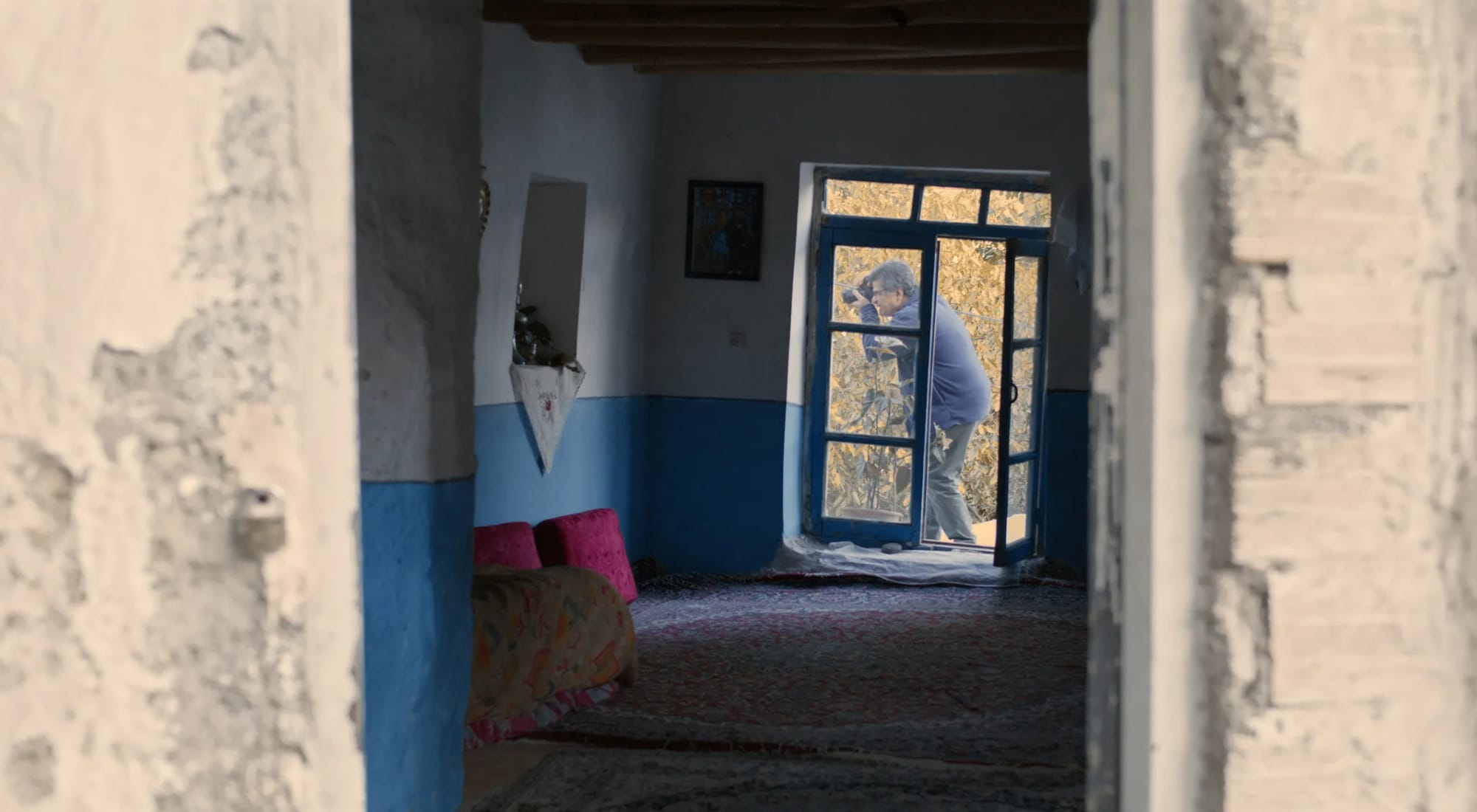
Panahi, playing himself, sits behind a laptop in a village on the Iranian side of the border with Azerbaijan and Turkey, guiding the shoot from afar. The actors portraying the exiled couple are hoping to emigrate themselves. Meanwhile, the filmmaker’s presence in the village provokes tension with local residents, whose fear of the authorities becomes the basis of another tragic narrative unfolding alongside the fictional plot.
The central theme is the wound of internal exile and the trauma of forced migration under authoritarian conditions. The idea of crossing borders, tearing oneself away from one’s roots, is rendered with particular bitterness as multiple storylines converge toward a bleak end.
As in much of Panahi’s work, flashes of humor serve merely as a thin surface over darker destinies. With remarkable dexterity, he braids together three parallel narratives so seamlessly that their complexity may not be apparent at first viewing. Only a second encounter reveals the architecture beneath.
An Archive of Trauma
The underground films are best seen not as isolated works but as linked fragments of a single long project. Viewed this way, there is no need to dismiss films shot on a cellphone or to excuse technical limitations imposed by surveillance, censorship, and the threat of arrest. Each film is a link in a chain.
Even works that appear incomplete, such as the semi-documentary This Is Not a Film, about preparations for a film that will never be made, testify to the persistence of an artist who refuses to stop documenting reality despite intimidation, prison, illness, and the constant specter of torture.
Taken together, Panahi’s underground cinema forms something like an unofficial archive of collective trauma. The filmmaker weaves his own experiences of repression into the broader wounds of Iranian society, steadily expanding that archive under conditions of permanent constraint.
“It Was Just an Accident”
Panahi’s newest film, which I saw in New York this winter, shares stylistic DNA with his earlier work but pushes beyond documentary-style realism. It also moves away from the familiar “film-within-a-film” structure. Instead, the narrative enters a darker allegorical territory, edging toward the macabre. Some scenes are intentionally exaggerated, even theatrical.
The film again mixes comic situations with an unfolding horror story about the psychic scars left by torture.
The plot unfolds over roughly twenty-four hours around three elements: a solitary leafless tree, a pit in the desert prepared for the possible burial of a man alive, and a van transporting the unconscious body of someone suspected of being a torturer. By chance, he has fallen into the hands of one of his former victims. The man drives from place to place seeking others who might confirm the captive’s identity so that revenge can be carried out with certainty.
A small procession of characters gathers inside the van: a mechanic, a bride and groom still in wedding attire, a woman photographer, and a nervous young man burning for revenge. They argue among themselves. Their politics diverge. None is completely sure the man they have captured is the one they remember.
During their interrogations years earlier, their eyes had been blindfolded, a common practice in Iranian prisons. But torture leaves traces that outlast sight. Recognition comes through other senses: a familiar smell from the torturer’s neck, the feel of his injured leg, the unmistakable scraping sound of his prosthetic limb. These sensory echoes, almost gothic in tone, summon buried memories.
Torture has inscribed itself in their bodies, in their nerves, in their perception of the world.
The film reaches its climax in the final twenty minutes, which also reads as an homage to Ariel Dorfman’s play Death and the Maiden. In a powerful fourteen-minute uncut shot, stripped of humor, Panahi stages the final confrontation between victim and torturer.
There is no tidy resolution, no moral closure. The eerie scrape of the torturer’s artificial leg continues under the closing credits, echoing forward, into the present and whatever future may follow.
— A.K.
© Copyright IranDraft
We are dedicated to looking beyond headlines.
We bring the full story and context to you when it comes to news from Iran.


