Pahlavism, the Return of "the Father"
The patriarchal logic of monarchy extends beyond dynastic succession. Once detached from the palace, it reappears at the national level, reorganizing political authority through paternal symbolism and demands for loyalty rather than popular consent.

8 February 2026
A Moment in an Evolving Iran
Contrary to positivist approaches, history is not a linear trajectory of progress or evolution. Rather, in moments of political exhaustion, it may be produced not as a new future but as a resurrected past, purified, reassembled, and offered as salvation. In Iran’s current context, shaped by a totalitarian theocratic system, national oppression against non-Persians, deep class disparity, gender apartheid, exiled oppositions, and the unresolved and unfulfilled ideals of a defeated revolution, the monarchy has returned. This return is not accidental; it has been actively produced, not as a memory of what was, but as an illusion of what might have been.
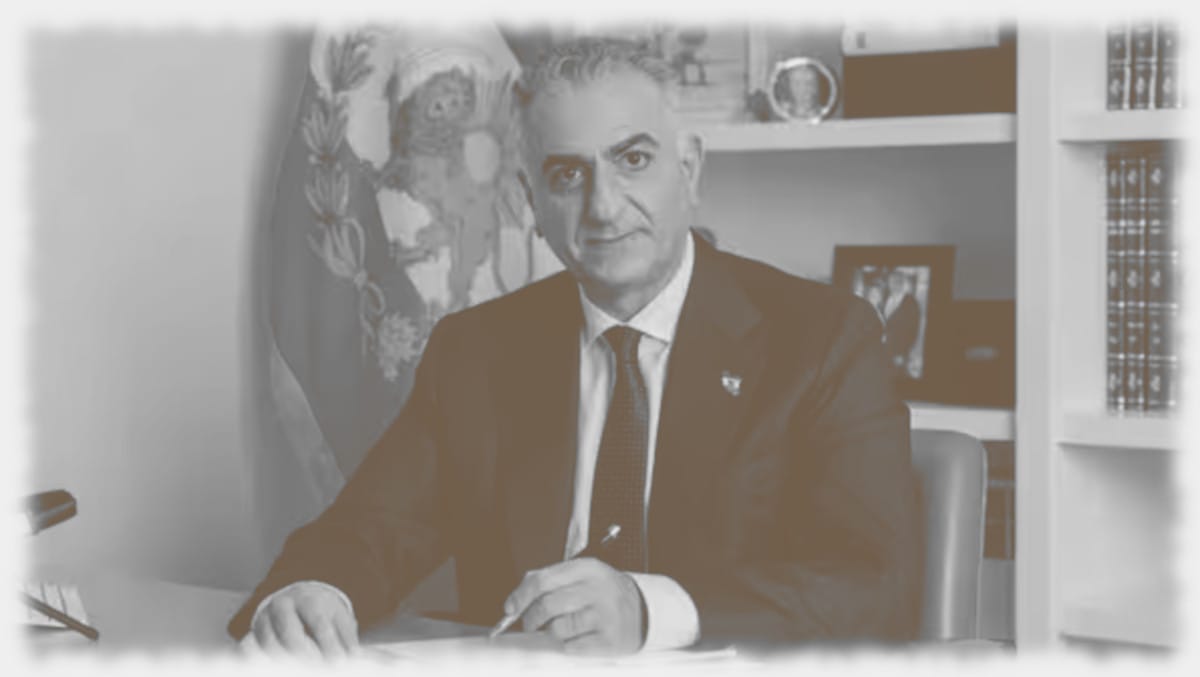
The emergence of Reza Pahlavi, the son of the last Shah of Iran, overthrown by the 1979 revolution, must be understood within this context. Presented by his supporters as a unifying national symbol and framed through the language of gender equality, constitutionalism, and democratic transition, the Pahlavi project claims to offer an alternative to the Islamic Republic of Iran (IRI).
This claim obscures a deeper continuity. Rather than offering a future or a rupture with the present, Pahlavism reproduces what Iranians have sought to abolish since before the 1979 revolution and during the Constitutional era (1906–1911). Pahlavism reproduces the illusion of emancipation and equality, regenerating it through hereditary legitimacy, paternal authority, political obedience, class division, and the suppression of dissent. What is invoked as renewal is, in fact, a reorganization of domination.
Women of a Monarchical System, the Guardians of Blood
To understand the non-democratic nature of a monarchical system, I begin with an absurd moment, though the call to bring back the Pahlavis is absurd enough in itself. Ironically, while the monarchical system, whether authoritarian or constitutional, has historically been against gender equality and has served as a system of women's subjugation, the monarchy is now portrayed as a guardian of women’s rights, even as a feminist force, in the current Iranian social-political context. To justify this claim, Pahlavists refer to the Unveiling Law of 1936 -Kashf-e hijab[1], and a few state-founded women's organizations, as though they were the harbinger of emancipation. In fact, these organizations were founded after the monarchy ruined the grassroots and independent women's organizations. Indeed, these organizations were established by the Pahlavi government to diminish the radical and grassroots potentials of independent organizations.
Monarchical systems and court culture have historically functioned as mechanisms through which male elites reorganize gender relations. Accordingly, the legitimacy of the figure who now styles himself as the “sovereign and heir of the founder of New Iran” rests solely on the male bloodline of the royal family, a lineage itself grounded in the subjugation of women. This legitimacy is not merely symbolic; it is structural.
How does this operate? Monarchy is structurally inseparable from patrilineal descent, as Friedrich Engels (2010) argues. Once political power becomes hereditary, the central political concern shifts from competence or popular consent to questions of succession, certainty, and the legitimacy of male heirs, particularly heroic figures.
Therefore, it inherently fosters women’s dependence not as incidental, but as functional; their status occupies secondary and tertiary positions within this framework, and female chastity, along with passivity, is rendered functional to the needs of the dominant ruler. Women are esteemed solely for their role as progenitors of heirs, responsible for bearing male members of the court and royal family. Their legitimacy is derived from marriage, chastity becomes a political virtue, and motherhood and passivity are civic duties, while their bodies serve as political instruments to secure succession. Indeed, their value is primarily reorganized around their reproductive functions. Women are regarded as biological guarantees of dynastic continuity rather than autonomous political entities, citizens, or equal members of society; they are the guarantors of history rather than its subjects!
Joan Kelly-Gadol (1977) points out that princely courts are not neutral cultural spaces; rather, the court actively reshapes ideals of sexuality and conduct in ways that consolidate male dominance and female dependency. Not only are the women's body and their sexuality subjugated to the monarchical system, but also their entities are completely served to the system as respected slaves. What then are the differences between a monarchy with these specificities and the IRI? When Reza Pahlavi names himself “the father of a nation,” the metaphor is not natural or innocent; it resurrects the patrimonial and nationalist logic under the name of transitional government, the subjugation and inferior position of women. Fatherhood is both command and care to the inferior and weaker subjects. This reality of women's positionality within a monarchy is that Henry VIII, King of England in the 16th century, married six times, and Mohammad Reza Pahlavi, the last king of Iran, married three times to have a male heir. The widows of kings are never allowed to remarry due to potential danger to the throne. Women within this structure are the mothers of the nation, the obedient wives of their husbands, the respected slaves. The monarchical system that is now to be the herald of gender equality is an antagonist of women's emancipation. Despite this structural antagonism to women’s emancipation, the monarchy continues to be presented as a viable political future. This contradiction makes it necessary to ask: who chants Pahlavi, and through which narratives is this authority sustained?
Who Chants Pahlavi?
The mainstream media has asserted that the monarchy and the son of the former Shah of Iran enjoy considerable popularity and maintain a trustworthy reputation among Iranians. In the absence of freedom of speech and the intense presence of censorship alongside the mainstream media bombardment of misinformation and disinformation, nobody can estimate an accurate scale of the popularity of Pahlavism. However, it is clear that a part of the Iranian diaspora and a small part of the Iranian populace, excluding non-Persian nations, view him as the only alternative for the future, which is an undeniable fact. That said, such claims about the scale of his popularity nationwide need to be substantiated. One may ask who is chanting for him, and how we should understand the wave of Pahlavism. Contemporary Pahlavism should be read not as a mass democratic movement, like the revolution of 1979, but as a class alliance led by exiled and within elites, mostly technocrats, sustained by media power.
Iranian mainstream and diasporic media have functioned as an ideological amplification apparatus for the Pahlavi project, selectively elevating his political visibility while marginalizing competing opposition currents over the past decade. He has not only been privileged to be in the headlines due to an accidental political position as the former crown prince of an overthrown King of Iran, but has also enjoyed the wealth that his father and grandfather plundered from the country's public resources. Thus, while other opposition groups have been oppressed very severely by execution, prison, and exile, he has had safety, wealth, and comfort in his life, and has never played a role as a serious oppositional figure until 2017, when the media started to propagandize for him as an alternative to the current government. This is not about some coordinated conspiracy. It is about how mainstream media, class interests, and a political project naturally line up.
The majority of diasporic Pahlavism is rooted in the ruling and upper-middle classes—those exiled after the revolution and those who emigrated during the IRI—many of whom are shareholders in transnational corporations or technocrats. This class alliance works to reinforce and preserve the existing power infrastructure in a potential transformation scenario. This constitutes the first scenario for both government technocrats and segments of the opposition, who are aware that Pahlavi lacks the capacity to assume a meaningful political role. The tumultuous propaganda for him by the elites and mainstream media, Iranian or Israeli, is just serving to hinder the democratic opposition from forming a bloc. Failing this, the presence of Pahlavism is another lever this class alliance can pull to retain power, as it is the closest political, economic, cultural, social, and ideological ally to the Islamic Republic of Iran. With such an alliance, it has been trying to present Pahlavi as “the only savior” through media manipulations.
These arguments would be incomplete without understanding the status of Pahlavi advocates among the lower middle and working classes; this may remind us of why figures such as Trump have popularity among the working class in the US. The nascent monarchism is not just a media product, a survival mechanism of an archaic political culture, or a residual traditional mentality, but a class-based one. It manifests an active historical construction forged out of present social conflicts and lived experiences. In his masterpiece The Making of the English Working Class, E. P. Thompson (1963) argues that political forms do not exist as inherited abstractions hovering above society; rather, they are produced through struggle. Oppressed and dispossessed people interpret their material conditions and frustrations using available cultural languages. Monarchism, here, functions among the working class as a resolution of accumulated experiences of oppression, de-unionization, dispossession, and the blocking of any collective agency under the IRI.
Decades of authoritarian rule, economic precarity, the effects of systematic deregulation of the labor market, the privatization of public resources and education, and the erosion of student and civic organizations have prevented the crystallization of durable democratic or class-based political identities. Suppressing all the independent and powerful worker unions that participated in the 1979 revolution, the government, in the post-revolution era, began establishing state-controlled unions from above, the Islamic Labor Councils, which have replaced most of the independent voices. They are not only dependent but also very weak and unable to fight for workers' rights, which have already come under attack from neoliberal policies. Therefore, the class consciousness has not disappeared; rather, it has been displaced. The appeal of monarchism for the working class lies in its capacity to translate diffuse social suffering into a simplified moral narrative. The ideas about the past, dignity, and redemption are created through national unity embodied in a single figure. This is not nostalgia as memory, but nostalgia as political labor. Mainstream media producers, diaspora elites, and organic intellectuals of this class actively shape this narrative by reworking selective memories of the Pahlavi period into a usable political myth. As Thompson (2013) explains, this is a case of experience being reorganized ideologically rather than politically. What the working class sees in Pahalvai is a denial of IRI, and the nostalgia for what was supposed to be but did not materialize.
The patriarchal logic of a monarchy does not remain confined to dynastic succession or courtly relations. This logic, once detached from the palace, reappears at the level of the nation, where political authority is reorganized through paternal symbolism and demands for loyalty rather than consent. In particular, in the Iranian context, where demands for a decentralized structure have been sacrificed under the pretext of national unity, and anything but this has been considered an existential threat.
The same logic that renders women functional to dynastic continuity is redeployed to discipline society as a whole, transforming subjects into dependents and dissent into betrayal. This moves Pahlavism far from its claims to feminism and equality, paving the way for an authoritarian political formation.
Pahlavism: A Proto-Fascist Formation
The report to the sixth congress of Kurdistan Democratic Party in 1982, stated: “Some argue that after the overthrow of the Khomeini regime, a referendum should be held to determine whether the people of Iran want a monarchy or a republic. We respond that the Iranian Revolution, with its tens of thousands of martyrs, was the greatest referendum in history, in which millions of Iranians decisively cast their vote and condemned the monarchical system.”[2] What this declaration insists upon is the finality of a historical rupture that Pahlavism now labours to erase. Pahlavism operates precisely through such amnesia. It fabricates the concept and image of Iran as a unified nation, whose axis is “Persian” nationality that ironically refers to other nations, such as Kurds, Arabs, Baluchis, Azeris, as residual “ethnic and tribal" formations. Unity in this image is not equality and plurality; it is the imposition and continuation of one century of centralized authority. Reza Pahlavi is positioned as “the father” of this nation, and everyone, every nation, gender, and class is expected to be obedient to the father. He is not a political actor; he is regarded as the legitimate heir and crown prince of the last Shah during the 1979 revolution. He appears as a paternal figure that is sanctified retroactively by lineage.
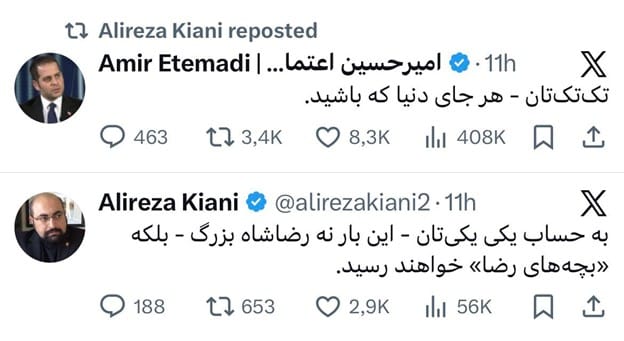
This mythology is produced by virtual and online campaigns such as "Man Vekalat Midaham” – I Give Power of Attorney, QR Code Secure Channel/ “National Cooperation”, Iranopasmigirim.com” / “We Will Take Back Iran”, and Make Iran Great Again MIGA, in order to project him as the father and savior of the nation. These political campaigns are just a few of the attempts to make and establish Pahlavism. His Phalanx groups, including his counselors, loyalists, and mercenaries, have been working relentlessly to place this image by threat, explicitly and implicitly, on social media and in actions and meetings[3]. Pahlavism, within a capitalism that has commodified everything, is manipulating even the mothers of justice seekers and those injured from the past movements and rebellions. Their efforts are played upon to sanctified Pahlavism: a mother who has lost their dear child, a man and woman who have been wounded and lost their eyes by IRI bullets, are pushed to announce their loyalty publicly and ask others to join the Pahlavi campaign. Pahlavism feeds on grief, suffering, loneliness, and precarity.[4]
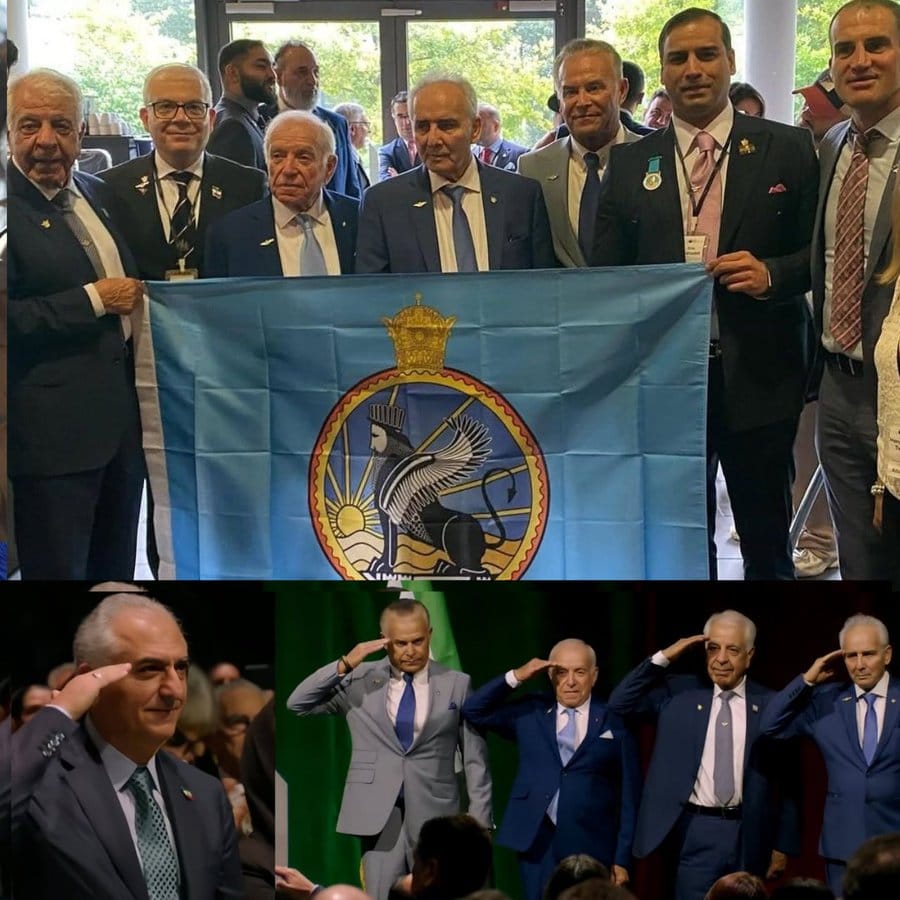
Pahlavist groups and phalanx-like mobs have attacked non-monarchist meetings and demonstrations, assaulted participants, and issued threatening messages and videos on social media. These threats openly promise the re-establishment of SAVAK[5] and the gallows[6] as revenge against those who are not Pahlavists and against non-Persians who refuse to accept “the Father.” They use abusive language that relies heavily on sexist insults rather than substantive argumentation. Pahlavists invaded and desecrated the grave of Gholam-Hossein Saʿedi—an Azeri-Iranian physician, playwright, intellectual, and political activist—because of his opposition to the Shah during the 1979 Revolution. What they did was accurate proof of Walter Benjamin’s observation that even the dead will not be safe from the enemy if he wins. The promised future here is death.
In the latest campaign, they have published the Emergency Phase Booklet [7] that centralizes extraordinary authority in a self-appointed “Leader of the National Uprising,” creating transitional institutions whose powers over executive, legislative, and judicial functions resemble the unchecked authority of Iran’s Supreme Leader rather than a democratically accountable framework. This effectively reproduces absolutist power in a new form, with limited mechanisms for public accountability. So, the form changes but domination persists, accountability dissolves into a state of emergency; as Benjamin illustrates, “the tradition of the oppressed teaches us that the state of emergency in which we live is not the exception but the rule.” Fascist formation can emerge from a defeated revolutionary subject, according to Benjamin. That is when a historical rupture fails to produce emancipation, the past returns not as memory but as myth. A collective interruption of a historical moment, the Iranian Revolution of 1979, that was fueled by mass participation and a potential future of equality, freedom, and prosperity, did not deliver its emancipatory promises.
What we are witnessing in monarchist revivalism is a retroactive construction of the past as a lost, orderly, and modern moment. This narrative excludes the history of brutality, state executions, totalitarianism, and atrocity. Instead, the past is recalled through carefully curated images, the 2,500-year celebration of the Persian Empire, a modern and disciplined army, and Iran portrayed as the world’s fifth most powerful military. These images are amplified by mainstream media and Pahlavist television channels, often intertwined with vague, nostalgic memories passed down through families whose elders were later traumatized by the brutality of the Islamic Republic. In this framework, the past is mobilized as an image to anesthetize the present, to make historical catastrophe bearable. The monarchy thus becomes a symbolic container for frustrated revolutionary desire.
[1] . https://en.wikipedia.org/wiki/Kashf-e_hijab
[2] . Ethnic Movements in Iran Collection. International Institute of Social History (IISG), Amsterdam.
[3] . https://www.bbc.com/persian/articles/c4gv2p9wgdjo
[4] . https://www.dw.com/fa-ir/%D9%87%D9%85%D8%A7%DB%8C%D8%B4-%D9%87%D9%85%DA%A9%D8%A7%D8%B1%DB%8C-%D9%85%D9%84%DB%8C-%D8%A8%D8%B1%D8%A7%DB%8C-%D9%86%D8%AC%D8%A7%D8%AA-%D8%A7%DB%8C%D8%B1%D8%A7%D9%86-%D8%A8%D8%B1%DA%AF%D8%B2%D8%A7%D8%B1-%D8%B4%D8%AF/a-73425951
[5] . SAVAK was the notorious and criminal secret police of Iran, responsible for systematic torture, surveillance, and the suppression of political dissent in pre-revolutionary Iran. See https://en.wikipedia.org/wiki/SAVAK
[6] . See the figures 1,2.
[7] . https://fund.nufdiran.org/projects/ipp/research/emergency-phase-booklet/
References
- Benjamin, Walter. (2003). On the Concept of History (E. Jephcott, Trans.). In H. Eiland & M. W. Jennings (Eds.), Selected Writings, Volume 4: 1938–1940. Harvard University Press.
- Engels, Friedrich. (2010). The Origin of the Family, Private Property and the State (E. Untermann, Trans.). Penguin Classics.
- International Institute of Social History (IISH). Ethnic Movements in Iran Collection. Amsterdam.
- Kelly-Gadol, Joan. (1977). Did women have a Renaissance? In R. Bridenthal & C. Koonz (Eds.), Becoming Visible: Women in European History. Houghton Mifflin.
- Thompson, E. P. (2013). The Making of the English Working Class. Penguin Classics.