Structural Crisis and the Expectation of Revolution
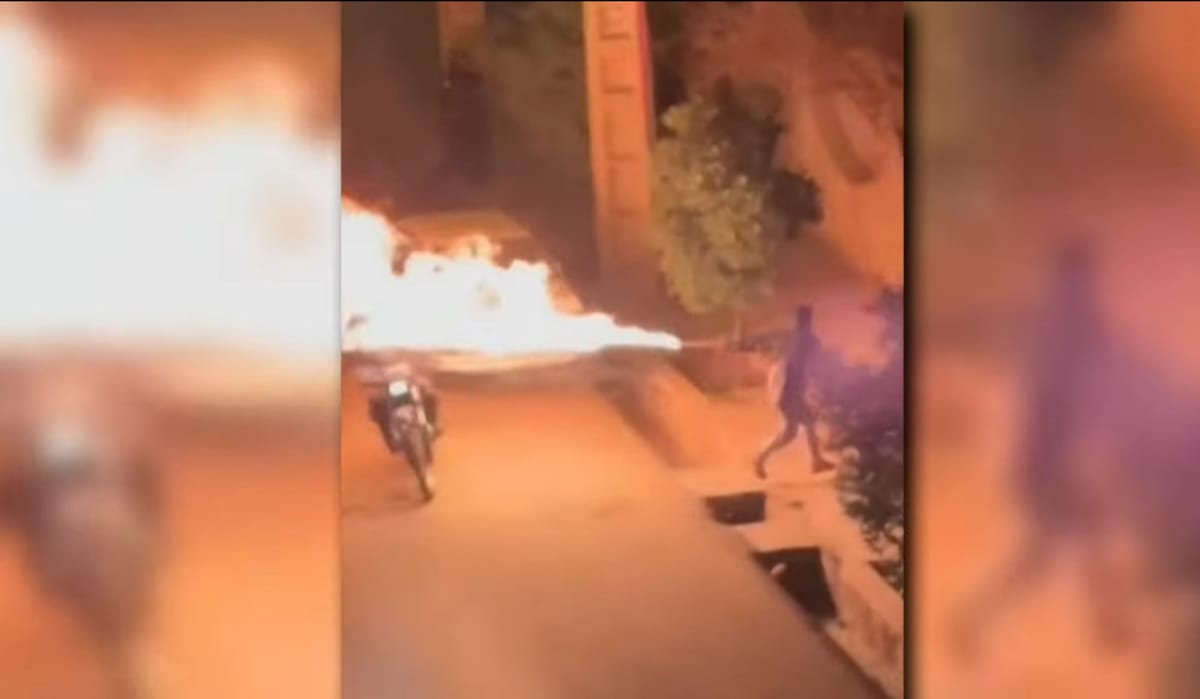
In Iran, economic demands are political. Like “Woman, Life, Freedom,” today’s protests are cross-class and pluralistic, binding bread-and-butter grievances to calls for human dignity and freedom, a signature pattern of 21st-century movements.

On Several Persistent Misreadings
Elham Hoominfar
IranDraft
Sunday, January 11, 2026
The street protests that began in Iran on Sunday, December 28, 2025, are neither a sudden explosion nor a fleeting reaction to the collapse of the national currency. Rather, they are the visible eruption of deep structural crises that have accumulated over time within the political and economic foundations of the Islamic Republic.
For years, Iran has experienced successive waves of social protest, each ignited by a different spark. Although the initial trigger of the current protests emerged from Tehran’s bazaar and at first took on a professional and economic character, the demonstrations rapidly spread to peripheral regions of the country and soon evolved into a nationwide movement. This protest wave has been marked by an unusually wide range of slogans, encompassing demands that are anti-authoritarian, anti-poverty, anti-corruption, and anti-rentier relations, alongside those supporting the Pahlavi monarchy. Despite their diversity, these demands now converge on a shared ultimate objective, the overthrow of the Islamic Republic. What is striking in these demonstrations is the clear convergence of economic grievances with demands for human dignity and individual freedom.
In recent years, Iran has endured some of the highest inflation rates in the world, particularly in essential food commodities, pushing low-income families to the brink of subsistence collapse. Since the United States withdrew from the JCPOA nuclear agreement in 2018 and reinstated its “maximum pressure” sanctions, even middle-class households have struggled to meet basic needs. Savings have been eroded under relentless inflation. When the JCPOA was signed in 2015, one U.S. dollar traded at approximately 32,000 rials. On the eve of the December protests, that figure had risen to over 1.47 million rials, a stark indicator of economic breakdown and the collapse of public trust.
Yet these protests cannot be reduced to a response to the price of the dollar or to a single economic decision. Emerging in the aftermath of the revolutionary “Woman, Life, Freedom” movement, which has profoundly altered Iranian society since 2022, the current uprising reflects the determination of a large segment of the population to pursue fundamental transformation.
The “Woman, Life, Freedom” movement, which called for the political overthrow of the ruling order and for big structural change in Iranian society, has not dissipated. It has persisted within public consciousness and social practice. The current protests are a continuation of the same legitimacy crisis afflicting Iran’s political system, though now with a reconfigured constellation of actors, including workers, shopkeepers, street vendors, bazaar merchants, teachers, civil servants, retirees, and their children, groups increasingly gripped by fear and despair about their futures.
Economic demands in Iran are inherently political. The economy cannot be disentangled from politics. What matters here is that these protests, like the “Woman, Life, Freedom” movement, are cross-class and pluralistic, a defining feature of many twenty-first-century social movements. By “cross-class,” this analysis does not imply the absence of class, but rather the convergence of social groups that have simultaneously been dispossessed, deprived of subsistence security, and stripped of human dignity. These groups consist predominantly of the working poor, laborers, and their descendants.
Various scenarios are now being projected onto this movement, ranging from hopes for a popular transformation from below to foreign intervention aimed at reconfiguring power within the system along neoliberal lines, to the possibility of a coup or the re-emergence of fragmented protests amid intensified repression. This article concerns not forecasting outcomes but clarifying several realities and correcting key misreadings surrounding these protests in the post- “Woman, Life, Freedom” period.
1. Sanctions and Internal Structural Crisis: The Political Economy of Sanctions and Crony Capitalism
A sanctions-based economy inevitably produces winning classes alongside a losing society. Sanctions generate an exceptional economic environment and, in turn, a rent-based system. While they impoverish the majority of the population, they simultaneously enrich a small minority. Multiple exchange rates, rent-seeking imports, and unaccountable institutions are defining features of Iran’s sanctions economy.
Crony capitalism refers to an economic system in which commercial success depends not on free competition, but on close personal ties between business elites and political authorities. Through preferential access, special licenses, or tax exemptions, the state grants monopolistic advantages to its allies, fueling corruption, inequality, and opacity. In such a system, insiders win while outsiders lose.
Sanctions push the economy out of a regulated and transparent framework into a permanent state of exception. Public oversight is weakened. Circumventing sanctions becomes a justification for secrecy. The result is the creation of massive rents for individuals and institutions with privileged access to licenses, information, and exclusive channels. One direct consequence is currency scarcity and the emergence of multiple exchange rates. Preferential government exchange rates, alongside semi-official and free-market rates, create profoundly unequal access, allowing some importers to sell goods at market prices or, in some cases, to extract foreign currency without importing goods at all. Most critically, this system fosters dense networks of brokerage, bribery, and patronage.
Under such conditions, only quasi-state security institutions or mafia-like networks can sustain economic activity. The underground economy expands, and structural corruption becomes institutionalized. Through the Islamic Revolutionary Guard Corps’ distinctive neoliberal policies and its vast holding companies, alongside relentless privatization of production, distribution, healthcare, education, municipal services, and even nature itself, segments of the ruling elite have grown immensely wealthy. Economic power has become concentrated in the hands of actors tied to opaque and unaccountable institutions. The state increasingly relies on shadowy intermediaries to sell oil, import essential goods, and transfer funds. Many of these entities are shielded from public audits, independent media scrutiny, and judicial oversight. This concentration of power erodes transparency, amplifies abuse, entrenches impunity, and intensifies economic pressure on the population. The critical point is that sanctions, when combined with the absence of democracy, a free press, and an independent judiciary, exponentially accelerate the dynamics of corruption.
In capitalist systems, sanctions may be costly but do not necessarily lead to systemic corruption. What distinguishes Iran is that sanctions have been instrumentalized as a pretext for repression, secrecy, and the elimination of oversight, transforming corruption into a governing method.
According to several international reports, Iran has experienced one of the world’s highest growth rates in the number of dollar-denominated millionaires, with an estimated 73 percent increase in 2022 compared to the previous year. At the same time, roughly one in three Iranians lives below the poverty line. The claim, common among some international left-wing commentators and supporters of the Islamic Republic, that protests are driven solely by sanctions and would dissipate if sanctions were lifted, is therefore deeply flawed. The crisis is structural and endogenous. Sanctions have intensified it, not created it.
Decades of authoritarian theocratic rule, the collapse of the education system, chronic mismanagement of economic, social, and environmental issues, and the coercive imposition of Islamic norms on everyday life have collectively pushed Iranian society toward decisive change.
Protest movements under authoritarian regimes are often protracted. Even when suppressed, they do not disappear. They return with greater intensity. As seen in the aftermath of the Jina uprising, subsequent protests become more confrontational and expansive as society gains greater courage to confront state violence.
These protests themselves function as a pedagogy, reshaping public consciousness and resistance strategies. They enable social networking, fracture official narratives, and decisively erode regime legitimacy.
Yet Iran’s crisis is not solely about changing a government. It is about transforming the relationship between power, wealth, and human dignity.
The current protests represent a continuation of the same legitimacy crisis, revealing deep distrust toward the ruling order across all social strata. That women wearing hijab in a small city like Harsin in Kermanshah Province, populated largely by Shiʿi Kurds, chant “Death to the dictator” speaks to a collective understanding of bread riots as fundamentally political acts. The 1979 revolution, despite its claims of restoring justice allegedly stolen by the monarchy, never succeeded in making justice universal.
2. Foreign Influence and Opportunism, and an Internal Structural Crisis
There is no credible evidence to suggest that Iran’s recent protests were designed or directed by foreign powers, whether as a primary catalyst or through direct orchestration. At the same time, a limited number of external actors are present at the margins of this crisis and can be described as opportunists or indirect influencers. There is no empirical evidence of a foreign agenda initiating these protests. A tweet by Mike Pompeo, the former U.S. Secretary of State, claiming that Mossad forces were standing alongside the Iranian people in the streets, primarily serves the Islamic Republic by enabling it to externalize its own crisis and, following repression, to justify executions and mass arrests of protesters.
If foreign actors were capable of engineering mass uprisings, they would have done so long ago and with far greater efficiency. Iranians have been present in the streets for years. The state has consistently invoked foreign interference to delegitimize protesters and, more importantly, to obscure the internal roots of the crisis. This pattern is not unique to Iran. It is observable in Russia and Egypt as well, and can be understood as a strategy of projection and the blaming of an external “other” within authoritarian regimes. This government has survived for forty-seven years through repression and exploitation. Had these protests been foreign-driven, there would be no need for their repeated reemergence year after year. External intervention, if decisive, would have swiftly resolved the matter. Since childhood, I recall that every minor protest, whether in the country at large, in a city, or even in our neighborhood, was attributed to foreign forces, a tactic that allowed state institutions to evade accountability.
Foreign intervention cannot plausibly account for the breadth of social mobilization, spanning retirees, workers, and women in small cities. Such arguments ignore the high personal cost of participating in a protest. People do not risk their lives for foreign projects, nor do they reappear across Iran after each wave of repression under the banner of a new movement.
There is no evidence of coordinated foreign direction. While signs of external attempts to influence the trajectory of protests do exist, the driving force of Iran’s uprisings remains internal: livelihood crises, the humiliation of human dignity and civic respect, governmental incompetence, and exclusion from political participation. Nonetheless, the possibility of a sudden military strike by a Trump administration, or covert negotiations with a faction of the ruling elite, particularly the Hashemi camp, the neoliberal faction aligned with the legacy of Ali Akbar Hashemi Rafsanjani, aimed at a low-cost, top-down transfer of power in favor of Western interests, cannot be dismissed. From my perspective, such scenarios pose a serious threat to the aspirations of the current protest movement.
3. A Regressive Current in the Protests: “Long Live the Shah,” Which Shah?
The sloganized support voiced by a segment of protesters for Reza Pahlavi, the son of Iran’s former dictator, has raised concerns among progressive groups and other protesters. This support is real but limited. It reflects less a political consensus than an accumulation of anger at present conditions, the absence of an organized alternative, and a nostalgia for lost order, a sentiment amplified by diaspora media and the audio overlay of certain early protest videos.
Most supporters of Reza Pahlavi are found among segments of an urban middle class exhausted by crisis, among Iranians living abroad, and within a generation familiar with the repression of the Islamic Republic but lacking direct experience of monarchical rule. In moments of acute crisis, such support becomes more visible as society searches for a recognizable, seemingly low-cost figure. Reza Pahlavi is a familiar name, carries no organizational burden, and bears no direct responsibility for today’s repression, nor even for that of his father’s era. Yet this support remains symbolic, limited, and episodic. Symbolic leadership without organizational capacity rarely produces a political transition.
Even if elevated to power through foreign backing and media promotion, such a figure would be unable to govern, and social disorder would quickly follow. In reality, the monarchy is a closed chapter for Iranian society. The political repression of Mohammad Reza Shah’s era, the role of SAVAK, economic inequality, and the concentration of power are not merely unattractive to Iranians. With rising political awareness, particularly among women, large segments of the country’s intellectuals, the working class, and ethnic communities, including Kurds, Baluchis, Arabs, and many Iranian Turks, can no longer accept authoritarian and patriarchal structures.
Moreover, Reza Pahlavi has neither a defined political party, nor an internal social network, nor a coherent socio-economic program. A number of opportunistic actors have recently assembled small groups around him, all of which, lacking a domestic political process or program, are dependent on specific foreign institutions that openly advocate external intervention and sanctions. These groups hold little legitimacy among Iran’s political and cultural elites. Pahlavi has not even been able to maintain cohesion among organized monarchists loyal to his father. Most of their senior figures have distanced themselves from him.
Nevertheless, regressive slogans such as “Long live the Shah” and “This is the final battle, Pahlavi will return,” heard in some parts of Iran, particularly in Lur-populated regions that suffered severe repression under the Pahlavi state, demand sociological interpretation. This phenomenon is not rooted in historical amnesia but in the functioning of collective memory under conditions of political crisis, especially when repression and collapse constrict the horizon of future choices. Protesters are seeking escape from deadlock, humiliation, and a futureless present. The invocation of Pahlavi does not necessarily endorse the Pahlavi system. It functions as a political signifier rather than a historical verdict, meaning “no to the Islamic Republic” and “no to the status quo.” Here, Pahlavi operates as a symbol of negation, not as a desired model.
The question of how “Long live the Shah” entered Iranian public consciousness cannot be reduced solely to the role of Persian-language media abroad, which receive funding from specific foreign governments and promote him as an alternative. Many young Lurs chanting the slogan do not remember Reza Shah’s repression of the Lur people. Even their parents have little direct memory of it. What they experience concretely is life in a land rich in oil and water that has nonetheless become one of Iran’s most marginalized regions. They face high unemployment and poverty. They see clearly how water development projects expropriate their land and water, producing unemployment and deprivation. This enemy is closer and more tangible than a Shah relegated to history and framed as an adversary by the Islamic Republic. If the Pahlavi state appropriated oil, collective memory still recalls water for agriculture, herding, and life. Under the developmental policies and neoliberal practices of the IRGC, water has been plundered, lands have dried up, and unemployment, illness, and poverty have prevailed.
Similar slogans have been heard elsewhere in Iran. In conditions where independent political organization is absent, social associations and parties are suppressed, and the future appears blocked or opaque, protest action gravitates toward simple, recognizable symbols. The nostalgia for the Pahlavi era, beyond being actively manufactured and amplified by foreign-funded media, reflects what sociologists describe as “defensive nostalgia.” When the future is foreclosed, the past, even a violent one, is reconstructed. These regressive slogans, alongside chants such as “Neither Gaza nor Lebanon, my life for Iran,” clearly emerge in reaction to whatever the Islamic Republic supports or seeks to embody. The regime’s violence retroactively sanitizes prior authoritarian rule. The extent of Islamic Republic repression has rendered people so desperate that the past, however unjust, is imagined as an idealized alternative. Violence and domination have reached such levels that anything the regime aligns itself with, including the Palestinian cause, is transformed into an object of rejection in protest discourse.
Yet this is not the entirety of the protest landscape. One of the most common slogans of recent years has been “Death to the oppressor, whether Shah or Supreme Leader.” This chant rejects both authoritarian models, monarchy and clerical guardianship, and seeks an order beyond paternalistic figures. Religion and monarchy, two forces that have historically obstructed Iranian social progress, remain targets of critique and rejection among the country’s progressive segments.
The prominence of the former dictator’s son is largely a product of exile media. Visibility in media should not be mistaken for social hegemony. Within Iranian society, support for Reza Pahlavi signals despair, not consensus. It is loud in exile, visible in media, but uneven and limited in practice. Iran’s protests point less toward a leader and more toward a profound rejection of authoritarianism, past and present.
In short, Pahlavi represents division rather than unity in a revolutionary context. He functions as an obstacle, not a bridge. His supporters abroad, aligned with the far right, have, according to numerous videos, engaged in fascistic attacks on other protesters and currents of thought, behavior disturbingly reminiscent of the Islamic Republic’s own paramilitary forces.
From Revolutionary Anger to Process-Building
Iran’s current protests are marked by revolutionary anger and revolutionary conditions. They are also characterized by striking diversity and plurality. The pressing question now is what comes next. The Islamic Republic has no remaining legitimacy. It is currently killing its citizens and, should protests subside, will likely move to execute detainees. In other words, if the regime regains control, it will seek revenge. At the time of writing, the state has cut off internet and landline communications across the country for approximately four days. Images and casualty figures are harrowing.
The hope shared by many is for a fundamental transformation. As an initial step, however, protests oriented toward process-building could focus on creating networks to secure the release of political prisoners from this movement and from previous waves of protest. If, as claimed by the president of the authoritarian state, Masoud Pezeshkian, who later appears to have deleted his tweet, negotiations with protest representatives are possible, this could serve as an initial strategy to save detainees’ lives, one that should be accompanied by a referendum.
During the Constitutional Revolution of 1906–1911, Iran had multiple leaders representing diverse social and national demands. Today, political and human rights prisoners, labor activists, teachers’ councils, and student and worker organizers can assume similar roles. Whether a major step is taken this week or in the months ahead, Iran requires sustained network-building and participation to move beyond historical authoritarianism, a condition that predates the Islamic Republic but has found its most complete expression within it.
© IranDraft
Also by Elham Hoominfar
Nationalism, War, and Affection for One’s Homeland