Vijay Prashad and the Sanctions Frame on Iran

4 February 2026
This essay is not about Iran; it is about the method through which Iran is explained.
It examines a mode of thinking that recognizes repression, poverty, and class struggle only as long as they occur in the “right” geography—and the moment they cross an unspoken boundary, reassigns everything to “context,” “complexity,” and “geopolitical considerations.”
Iran today is not facing a shortage of data, nor any genuine ambiguity. What is scarce is not information, but position-taking. Workers’ protests, strikes, the repression of women, the looting of pension funds, the arrest of activists, and the killing of protesters are neither hidden nor disputed. What is contested is how these realities are approached: are they understood as political and class struggles with universal demands, or as issues that must be handled with caution, distance, and a suspension of judgment?
This essay starts from the premise that silence is a political choice, not the absence of an opinion. When repression unfolds on a social scale, refusing to take a position is not neutrality, but a form of practical alignment with the status quo. This is especially true when such restraint is applied asymmetrically: rights, freedoms, and class struggles in the West are treated as immediate and unconditional, while the very same demands in societies like Iran are made contingent on “context,” “proper timing,” and “geopolitical consequences.”
The central argument of this text is straightforward: if political rights and class struggle are universal, they must be universal everywhere. If they are not, then one must honestly admit that what is called “universal” is, in practice, a geographical privilege. Iran exposes this contradiction with brutal clarity, because it does not allow repression to be discussed without naming it, nor struggle to be explained without solidarity.
What follows is an attempt to read Iran not as an “exception,” not as a “complex regional case,” but as the breaking point of a method: a method that sees imperialism but suspends internal despotism; that condemns sanctions while sidelining the repression of workers; and that, in the name of caution, withdraws from solidarity.
Beyond Sanctions: Power and Repression in Iran
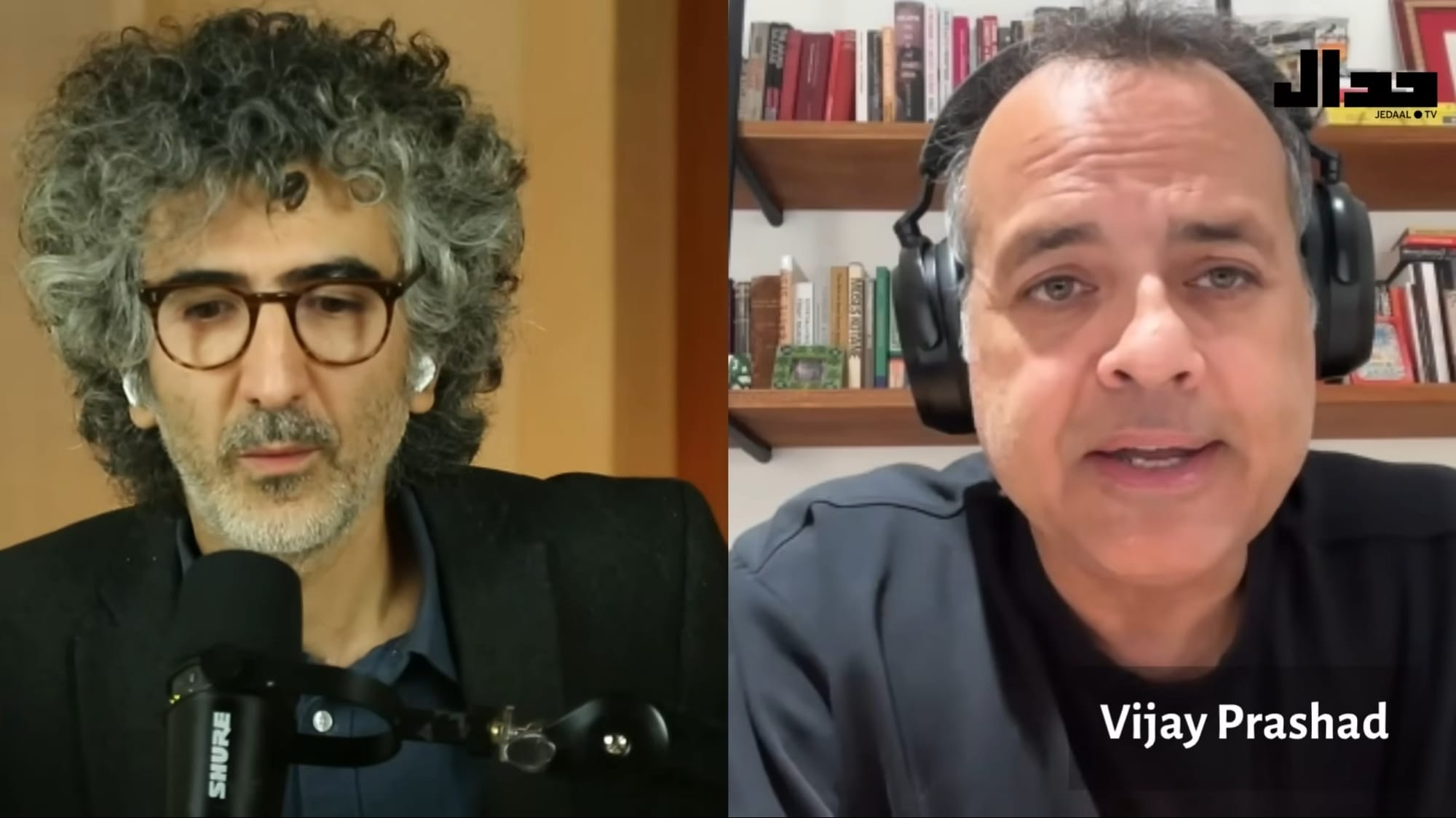
Ali Alizadeh, an Iranian pro-regime propagandist based in London, had published an interview with Vijay Prashad on his English-language YouTube channel that, instead of cheap moralizing or Twitter-style brawls, focuses on the “mechanism.” Prashad treats sanctions not as a mere “political disagreement,” but as a form of economic warfare—something that can warp an entire society from top to bottom.
From the start, he insists on one point: “When a country uses its enormous power to stop others from trading with you, that’s a violation of international law.” He then brings sanctions down from slogans to concrete tools: being cut off from SWIFT, blocking access to credit, and secondary sanctions that push shipping companies and banks out of the field through threats from a distance. This part of the interview is especially useful—and necessary—for non-Iranian audiences: sanctions aren’t just “lower income.” They’re a whole set of locks that choke trade, medicine, insurance, logistics, and even routine payments.
But the interview runs into trouble precisely when it moves from describing the mechanisms to analyzing Iran’s political and social reality. Prashad is strong on the external siege, yet he noticeably steps back when it comes to how that siege interacts with the nature of the state in Iran: a rent-based, security-driven system that is anti-worker and aggressively hostile to the left. The result is a mix of truth and omission. Sanctions are rightly described as creating “distortions,” but there’s no real explanation of how those distortions, in Iran, have been turned into an accumulation model—who profits from it, which forces manage it, and why Prashad’s proposed remedies (especially his calls to universities and “internal debate”) float in midair once you account for the regime’s structural authoritarianism.
With that in mind, it’s worth saying clearly: the interview I’m criticizing is a media product in the full sense of the word. It was published by someone who, over the past years, has mostly acted as a propaganda actor aligned with the narrative of authoritarian power—through framing choices, question selection, and constant boundary-setting around what can and cannot be criticized. When the sanctions-and-external-pressure story is packaged through media that aligns with a repressive government, “anti-sanctions” talk can quickly become a language for suspending internal critique.
In other words, instead of holding two truths at once—sanctions are a crime, and the regime is authoritarian and anti-worker—the audience is nudged toward a single conclusion: “So let’s pause domestic criticism for now; geopolitics first.” Then a false binary is built, as if criticizing internal despotism automatically means lining up with external oppression. This narrative, by inventing a polarized “Iran versus the other oppressor,” rewrites class struggle and social movements in Iran inside the regime’s own oppressive storyline. That’s exactly the function of a political media network aligned with power: defining the field of debate so that criticism of repression and the rentier economy is either erased or pushed to the margins.
This framing manages the contradictions in the analysis in a way that ultimately benefits Prashad’s preferred camp—and Alizadeh’s preferred state.
Sanctions as “distortion”: true, but not enough
Prashad repeatedly stresses that sanctions don’t just make an economy poorer; they distort it: “When you cut off legitimate trade, you push the economy off course.” He’s also very direct about the human consequences. Sanctions hit everything from the “macro level” down to the “level of the body”—from shortages of medicine and nutrition to “stunted growth” in children. That description is real and should be taken seriously, because it’s exactly where the standard pro-sanctions story in Western media falls apart: sanctions aren’t “targeted” or “precise.” They’re a collective punishment that lands on people’s bodies and everyday lives.
But this is where a sharper question begins: if sanctions produce “distortion,” how is that distortion distributed in a class society? Who pays the cost, and who gets the opportunities? The interview doesn’t go much beyond generalities here. Prashad says sanctions create “disruption” and strengthen smuggling and informal routes, but he spends less time on a very specific reality in Iran: those informal routes, and the “locked” economy itself, usually benefit networks connected to the state and to quasi-state/security institutions.
There’s also a hard, concrete indicator that shows up right here: export currency that doesn’t return. In recent months, a member of parliament’s economic commission said that from 2018 (1397) to December 2025 (Azar 1404), more than $116 billion in foreign currency earned from non-oil exports did not return to the country. This figure is in the same family as other claims in the same case: the same MP had previously spoken of more than $95 billion not returning from 2018 to the first four months of the current year, and the Central Bank’s public relations office rejected the precision of that earlier number. Whatever the final verified total is, the basic problem is clear: the scale is so large that it can’t be dismissed as a minor administrative error or a rare exception.
In Iran, sanctions haven’t only produced poverty. They’ve helped build a specific political economy where rent-seeking middlemen, import monopolies, multiple exchange rates, and “favorites-only” contracting become the real engines of profit. This is exactly where the analysis has to move from “sanctions” to “the state”—and this is also exactly where the interview hesitates.
An external shock doesn’t just make people poorer; it bends the pricing and supply chain. In the official report on the “average prices of selected food items” for October–November 2025 (Aban 1404), the data is clear: in dairy, pasteurized milk rose 6.2% compared to the previous month. In meat, beef/veal rose 6.3% and lamb rose 3.3% month-to-month.
But why? The main drivers of dairy and meat are animal feed inputs (corn, barley, soymeal) and related costs—an area where sanctions, by restricting access to foreign currency, banking channels, and transport, raise procurement costs and make supply unstable. That instability creates room for dual pricing and rent, and pushes the cost onto consumers. The head of the central union of livestock farmers says the renewed rise in raw milk prices is linked to a “2 to 3 times increase” in feed prices inside the state procurement platform and to importers selling feed “off-invoice.” Meanwhile, another report points to brokerage, corruption, and the emergence of dual pricing in that same platform—so that at certain times feed wasn’t even supplied, and farmers were forced to buy from the open market at much higher prices (including sharp spikes in soy prices).
Meat follows the same chain, made worse by a domestic hit: drought and falling production of fodder and feed grains tighten supply and raise production costs. Donyaye Eqtesad points to significant declines in barley and wheat output due to drought (around 30–40%) and links that to reduced supply and rising red-meat prices.
So the result is a combined effect: sanctions bend the “procurement and payment channels,” internal policy and a rent-based/dual-price distribution network multiply the costs, drought adds further supply pressure—and in the end, these pressures land on the dinner table as more expensive dairy and meat.
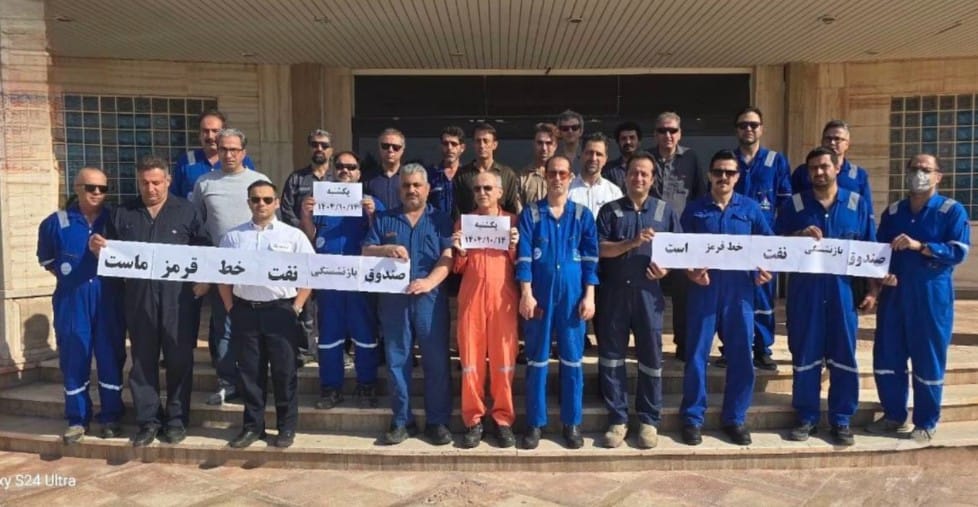
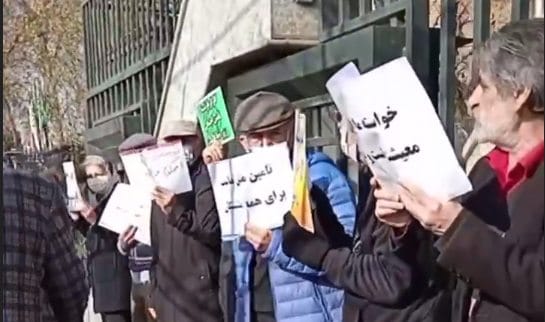
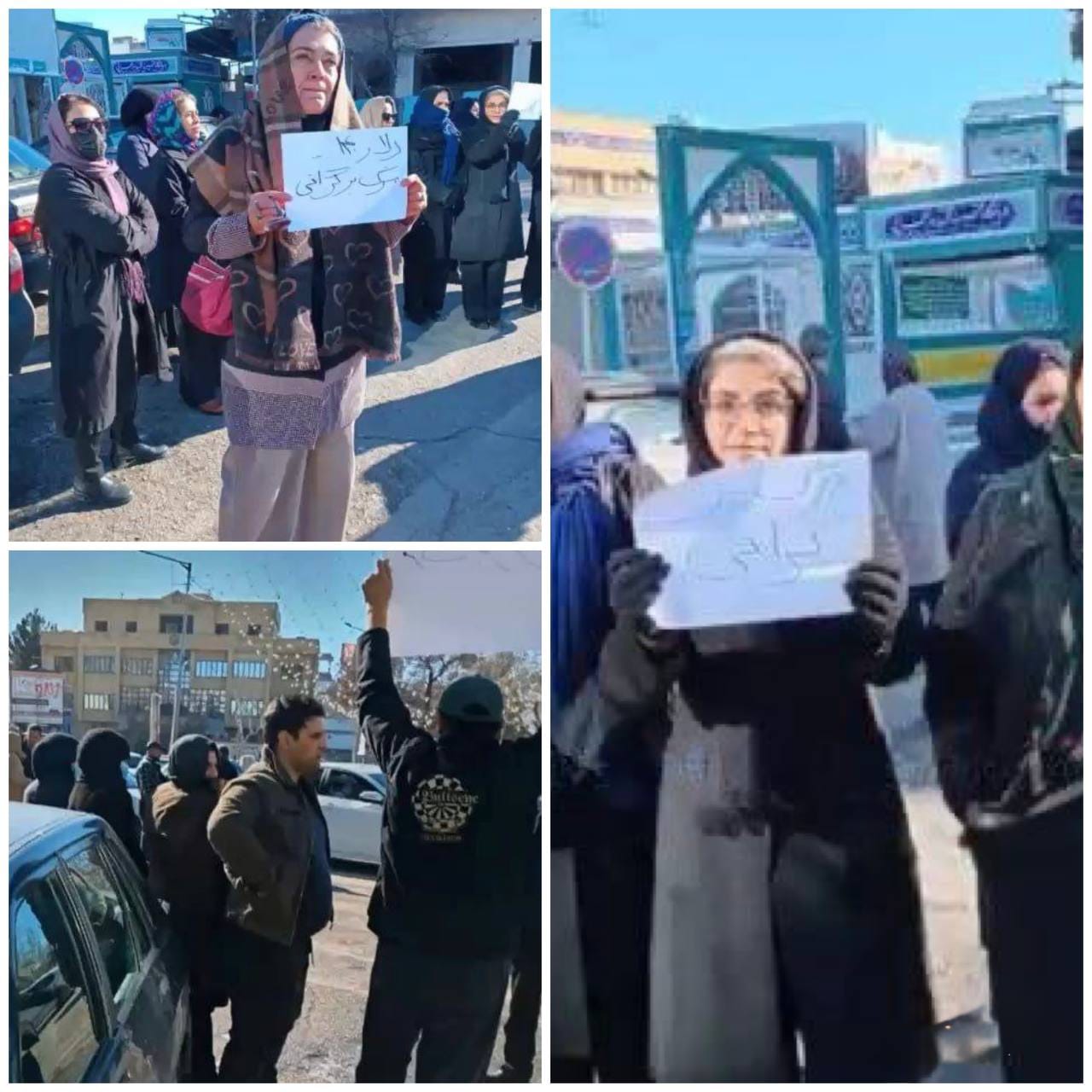
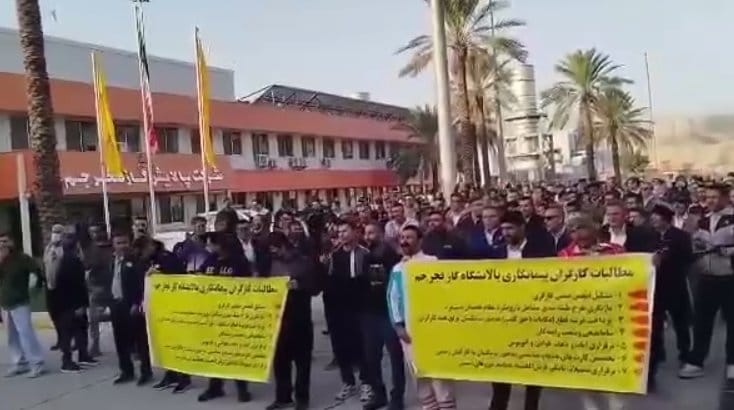
Protests by oil workers, retirees, teachers, and steel workers over the past months.
The core contradiction: “I won’t get into domestic politics,” but…
Prashad draws his red line several times: “I’m not Iranian… I don’t want to get into the details of the conflict… this debate has to happen inside Iran.” He even adopts a tone that sounds like a defense of state authority: “I believe in the idea of sovereignty.” If this position were genuinely neutral, you could read it as understandable caution. The problem is that this “non-intervention” becomes selective in practice.
While insisting he won’t step into Iran’s internal disputes, Prashad still attacks the Iranian left that criticizes both the regime and the so-called “Axis of Resistance,” reducing their critique to a moral–philosophical mistake. He says they come from a “politics of purity,” and adds, “I reject politics of purity.” Elsewhere, he accuses critics of standing outside history and judging reality from something like a “Socratic viewpoint,” insisting: “In my view there is no third way… you have to enter the ugliness of reality.”
That’s where the contradiction takes shape. When the criticism is aimed at an authoritarian state and the region’s armed networks, he labels it “purism.” But when the conversation turns to sanctions and imperial power, he goes into detail and carefully explains the mechanisms. In other words, “neutrality” shows up exactly at the point where criticism gets close to the heart of domestic power. The practical outcome of this stance—whether he intends it or not—is political: it lightens the weight of internal critique and loads the explanation onto external factors. In a country like Iran, that shift is not small. It can decide whether being anti-sanctions becomes a defense of society, or slides into a language that excuses the state.
His observation that the left and communism—especially as organized forces—suffered a major defeat in Iran after June 1981 (30 Khordad 1360) and the wave of nationwide repression is true. But the “main task” is framed not as understanding what actually happened after that defeat—how forces were broken, how they survived, how they might rebuild under dictatorship—but as “summing up the experience,” listing “mistakes,” and preparing for some “future historical opening.” From the start, this framework flips the problem upside down: instead of asking how defeat was secured through power structures, repression, and class balance—and how it reshaped social life—it turns defeat into a moral/educational case file against the left itself.
In a country where authoritarianism is structural, removing authoritarianism from the analysis isn’t neutrality; it’s giving power a share of the story. And any anti-sanctions analysis that misses this will, sooner or later, turn into the language of justification. Fighting the external siege without fighting the internal lock easily becomes fuel for a machine that crushes real human lives under the wheels of geopolitical binaries—binaries ordinary people neither created nor benefit from.
The missing variable: systematic anti-left repression and an anti-labor state
In parts of the interview, Prashad broadly accepts that there are serious problems inside the country. He says, “sanctions aren’t the only problem,” but they are “the key problem.” The issue is that he doesn’t connect this key sentence to the reality of Iran’s domestic politics—and that’s where his analysis gets pulled off course. Because in Iran, the “key problem” isn’t only sanctions. The key problem also lies in banking and monetary policies, alongside a state that for decades has crushed every form of independent worker and left organization and has securitized the entire political field. That has been the engine of the ruling political economy. Without unions, without the right to strike, without independent media, without safety for activists, any economic policy can easily turn into a policy of pushing costs downward—whether under sanctions or without sanctions.
This is exactly where Prashad’s calls to universities and to “building intellectual capacity” lose their real meaning. He asks, “What is being taught in Iranian universities? Are they just copying Chicago textbooks?” and concludes that Iran needs to build a local theoretical capacity. But this prescription is written as if politics were a vacuum.
The moment you talk about “intellectual capacity,” you have to show what happens to the people who are actually trying to do that work. During the wave of arrests in Aban 1404 / November 2025, several critical and left-leaning researchers and writers/translators—including Parviz Sedaghat, Mohammad Maljoo, Mahsa Asadollah-Nejad (a political sociologist), and Shirin Karimi—were reportedly arrested or summoned, and it was reported that security forces confiscated electronic devices and books. These cases were framed explicitly as “security threats.” This is not a one-off. Saeed Madani, a sociologist and social researcher, was also arrested in 1401 (2022) and imprisoned under security-related charges, with reports pointing to the continuation of his detention and legal process.
So in Iran, the problem isn’t that “the university has no ideas.” The problem is that the university, as a social field, is under heavy security pressure and political control; professors, students, unions, media, and civic organizations face repression. You can’t seriously expect universities to produce economic alternatives when the basic conditions for academic independence, free speech, and safe political activity don’t exist. In that kind of environment, the generic advice—“go build capacity in universities”—without confronting systematic repression becomes an abstract slogan. “Ideas” without “independent social power” can easily turn into ideological decoration for the very order you’re trying to challenge.
Put more precisely: Prashad reduces the crisis, at least partly, to an “intellectual vacuum,” while in Iran an “organizing vacuum” is far more decisive. These are not the same thing. An intellectual vacuum can be addressed with seminars, books, and debate. An organizing vacuum can only be addressed through political freedom, the right to organize, and breaking the cycle of repression.
Second blind spot: geopolitics and the regime’s own war-making
The interview takes an unbalanced approach: it views war and geopolitics mainly through the lens of imperialism. Prashad says Iran has been a “frontline country” since 1979, and that sanctions and pressure are meant to stop Iran from using oil revenue to build “influence.” He even argues, when talking about a multipolar world, “We don’t live in a multipolar world… a hyper-imperialist structure controls everything.” This picture contains part of the truth: the United States and its allies still hold the upper hand in financial systems, communications infrastructure, and military power, and economic warfare is real. But removing Iran’s own role in escalating the crisis is a political omission, not just a lack of information.
In Iran, regional and security policy isn’t simply a “response to external pressure.” It’s part of the regime’s survival logic, and it directly subordinates the economy to security priorities. Permanent securitization raises risk, fuels capital flight and migration, pushes budgets and public priorities toward coercive institutions and expensive projects, and gives the state a ready-made language—“special circumstances”—to justify any austerity measure. In this kind of structure, sanctions create a crisis, but the state turns that crisis into a method of rule: shifting the costs onto the lower classes and stabilizing the order through repression. If you don’t see this loop, the analysis stays incomplete and drifts away from reality.
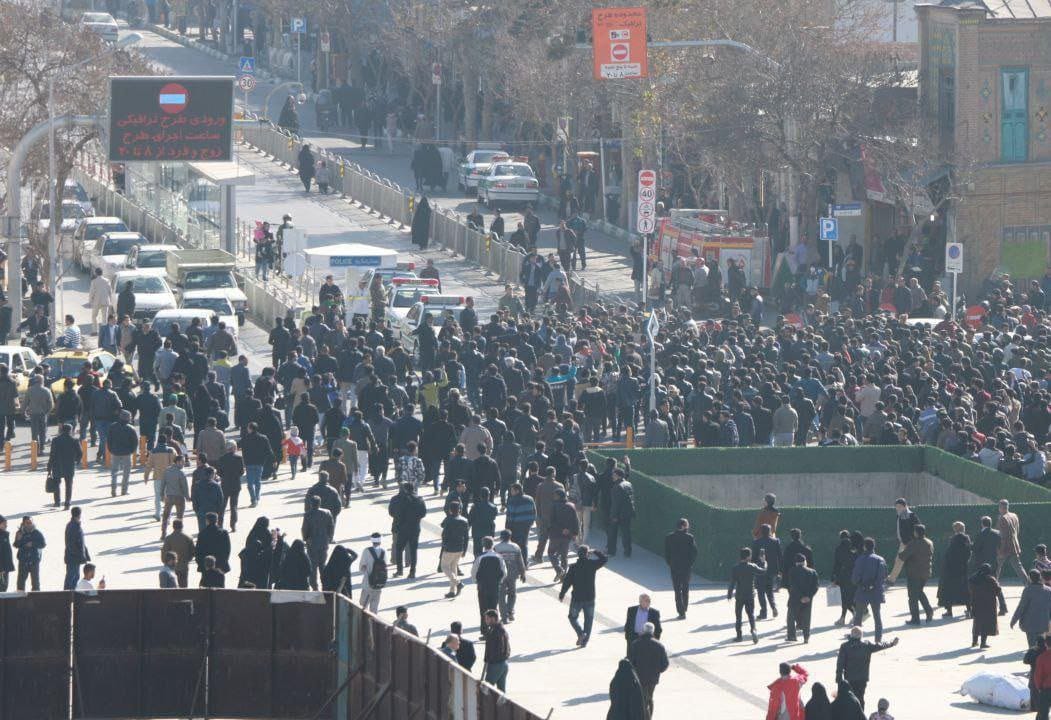
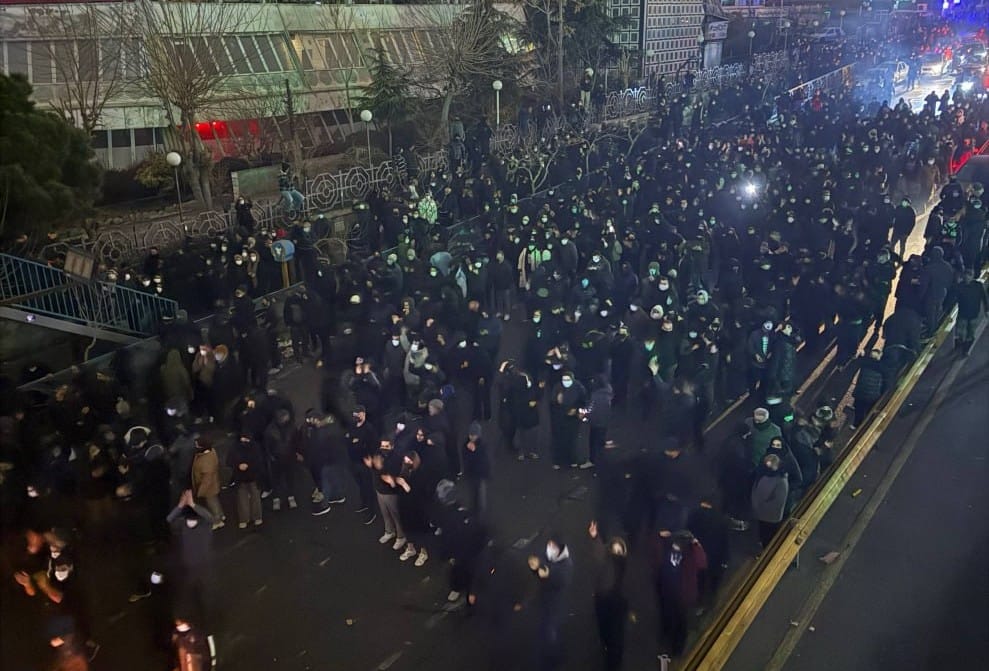
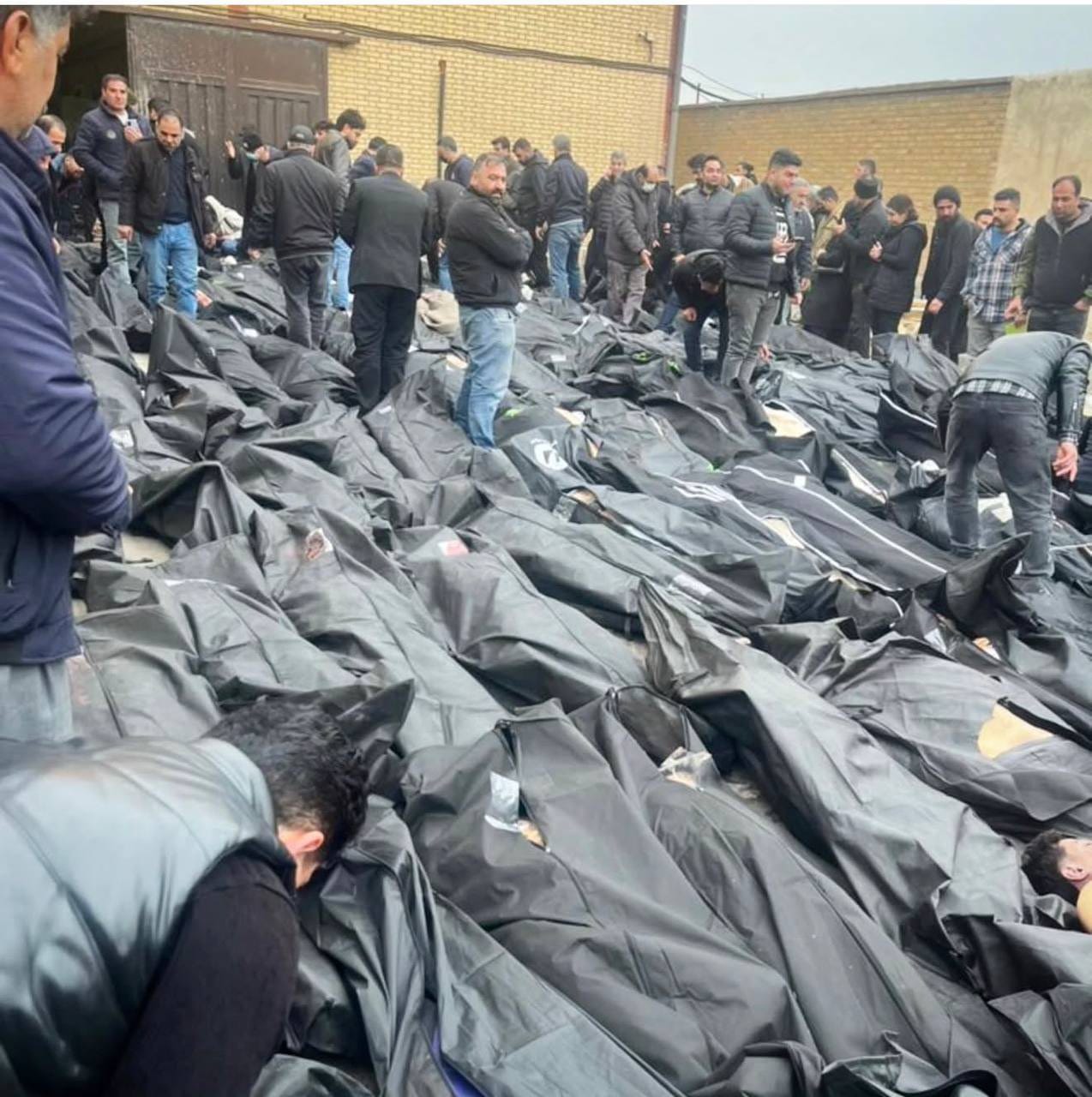
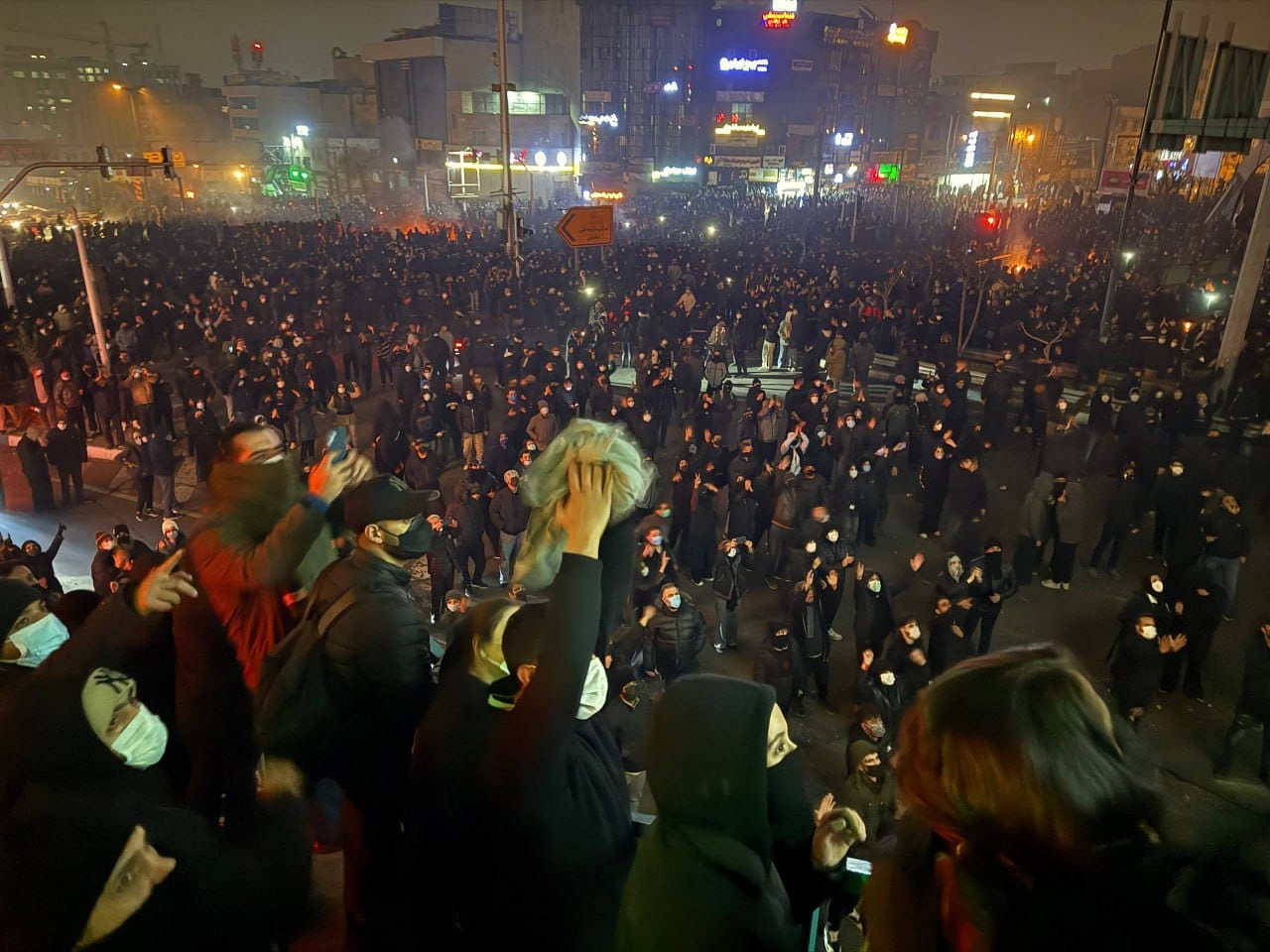
Protests against the economic and living conditions and price increases in late December 2025, which were ultimately stopped by the horrific massacre of protesters in January 2026 and threats of war. Public content
“Pivot to the East”: from trade routes to emergency dependency
In the interview, Prashad offers several concrete proposals: a trilateral “Iran–India–Pakistan” meeting, ideas about pipelines, ports, academic exchanges, and reducing reliance on the West’s “financial plumbing.” He even suggests that Iran should “look to the East” and use China’s capacity. Up to a point, parts of this can sound realistic: creating payment channels, diversifying trade, and reducing vulnerability to Western financial tools. The trouble begins when this pivot is presented as a path to salvation, or when China and Russia’s ties with Iran are discussed without taking into account how unequal Iran’s bargaining power is.
Prashad himself warns more than once that China is not a “savior,” saying, “I’m not going to tell people China will save you.” Still, when asked whether China and Russia are “imperialist,” he gives a very absolute statement: “I don’t believe these countries are imperialist at all… China comes to trade… it provides capital for industrialization.” He then accuses those who warn about China of “thinking like victims,” saying this whole “China is this or that” debate is “victim talk,” and insists: “Talk about an Iranian project.”
Here, there’s a methodological problem again. China and Russia—despite the campist fantasy—have not cut off their relations with the United States the way Iran has. Their logic is a mix of competition and bargaining. For them, Iran is not an existential issue; it’s a card, an energy knot, a transit corridor, a market, and one file among many in larger negotiations. In practice, they’ve shown this again and again. In that framework, when Iran is stuck in its “worst economic situation” and its access to capital, technology, and markets is restricted, its bargaining power shrinks. That creates the risk of “emergency dependency”: harsher contracts, discounted sales, projects designed more for moving goods and energy than for social development, and relationships that—if the domestic partner is the same rentier-security bloc—end up reproducing the same order.
Take a clear example. For years, both China and Russia, in different ways and for their own regional calculations, have echoed and aligned with the UAE’s claim over the islands that are under Iran’s sovereignty, as part of strengthening their ties with Gulf states. Meanwhile, it’s basically unimaginable that the Islamic Republic could take a similar stance against China on Taiwan or against Russia on the Ukraine war. That asymmetry comes from Iran’s weaker position and dependency—not because Iran is genuinely aligned with China and Russia on an equal geopolitical footing. They have never followed Iran’s regional agenda, and during Israel’s 12-day attacks they not only didn’t defend Iran, they took neutral positions that triggered widespread domestic criticism and protests. At the same time, both powers maintain—and have expanded—broad political and commercial relations with Israel.
So the issue isn’t “China is good or bad.” The issue is: who negotiates on Iran’s side, and what accountability mechanisms exist? Without accountability, without independent unions and free media, without transparent contracts, a “pivot to the East” becomes a rerouting of rent—and that has happened before. Prashad talks about an “Iranian project,” but without political freedom and independent social power, an “Iranian project” turns into the project of the existing authoritarian state, which is, in the first place, the very problem.
Chicago technocrats as a smoke screen
One of the more striking parts of the interview is when Prashad discusses the influence of Western education and the IMF’s agenda. When he says countries in the Global South have been pushed into believing that “higher education must be done in the West,” and that at the same time the IMF says “destroy the universities” and even cut fields like philosophy, and then concludes that this produces managers who become “callous” toward ordinary people, he ends up shifting the cause. This storyline drags the crisis away from relations of production and class power and turns it into a story about “ideas, education, and personal biographies.”
But in Iran—and really in any capitalist society—policies like cutting subsidies, suppressing wages, rent-based privatization, and expanding temporary contracts are, before anything else, the product of the bare logic of capital accumulation. When profit rates, state finances, and access to foreign currency are under pressure, the easiest way to protect the existing order is to push the costs onto the lower classes. In that setting, “Chicago” mostly functions as a language of justification, not the engine driving the machine.
Put more plainly: even if tomorrow every “Chicago economist” disappeared from Iran (and even if Prashad’s claims about the intellectual structure of Iranian universities were accurate—which they aren’t), as long as the economic and political structure revolves around ownership, rent, monopoly, and cheap labour with no rights, the same policies would come back under different names—because the problem isn’t “ideas.” It’s power. Sanctions, war, and currency crises can be shocks and accelerants, sure. But the decision about how that shock gets distributed—who gets shielded and who pays the price—is made inside the ruling capitalist relations themselves.
In Iran, what makes this distribution possible isn’t just an imported economic theory. It’s a very specific institutional mix: a rentier–security economy, monopolistic import and distribution networks, quasi-state firms, and the crushing of independent worker organizing. In such an order, “callousness” isn’t a personal moral flaw of individual managers; it’s a structural function. When labour has no right to organize, shifting costs from the top down becomes the cheapest and safest policy.
And this is exactly where Prashad’s emphasis on “bad education” ends up producing a political effect—even if unintentionally. It blurs the capitalist nature of the crisis and downgrades the regime from a class-and-security project into a state that’s merely “trapped by wrong ideas” held by a few people. The result is that, instead of asking the central question—which class forces profit from sanctions and crisis, and how do they secure those profits through repression?—the discussion slides into secondary questions: who studied where? which books did they read? In the end, it’s the political-economic logic of capitalism that explains why austerity is imposed on people, not whether a minister once studied under this or that professor.
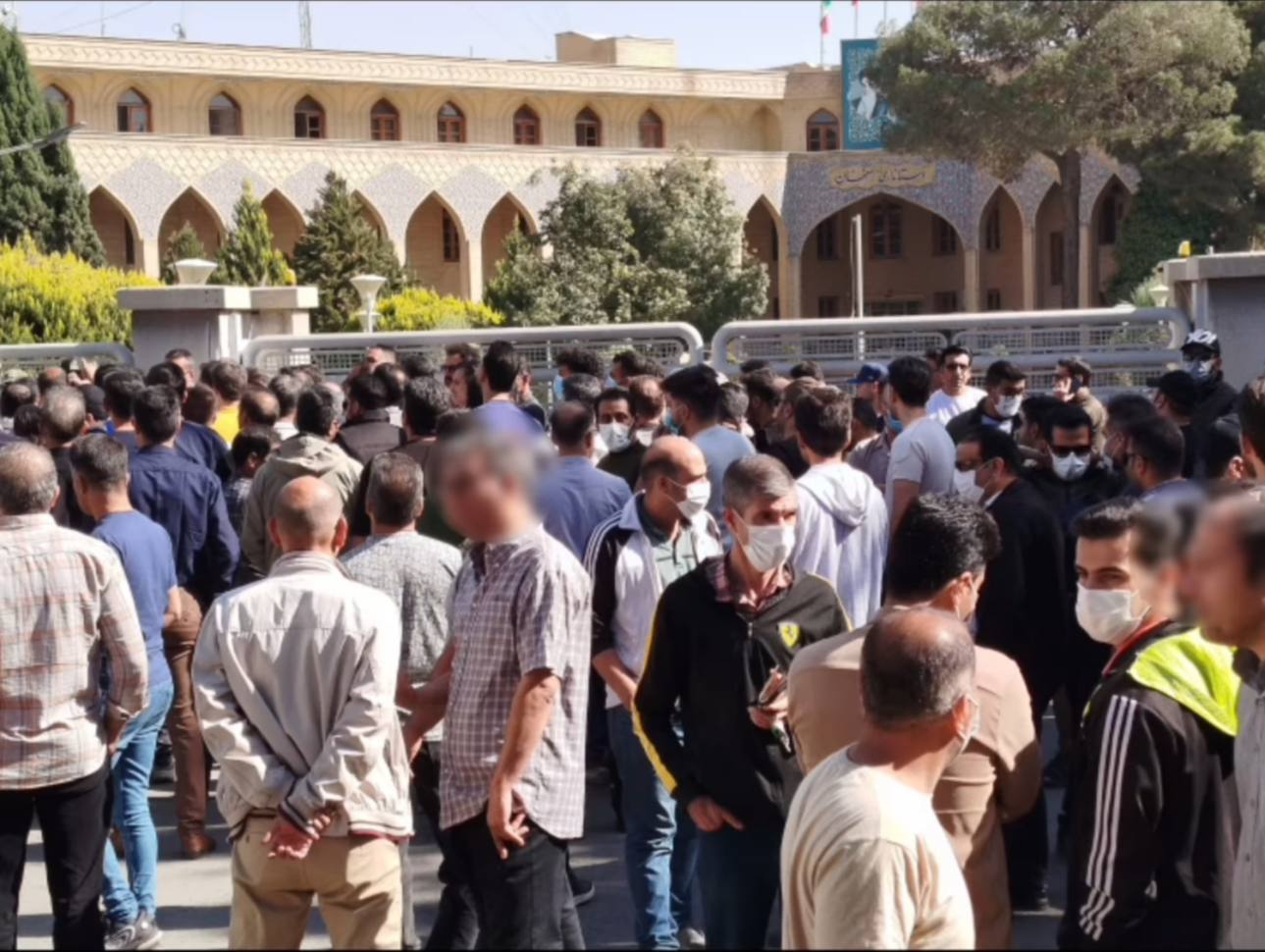
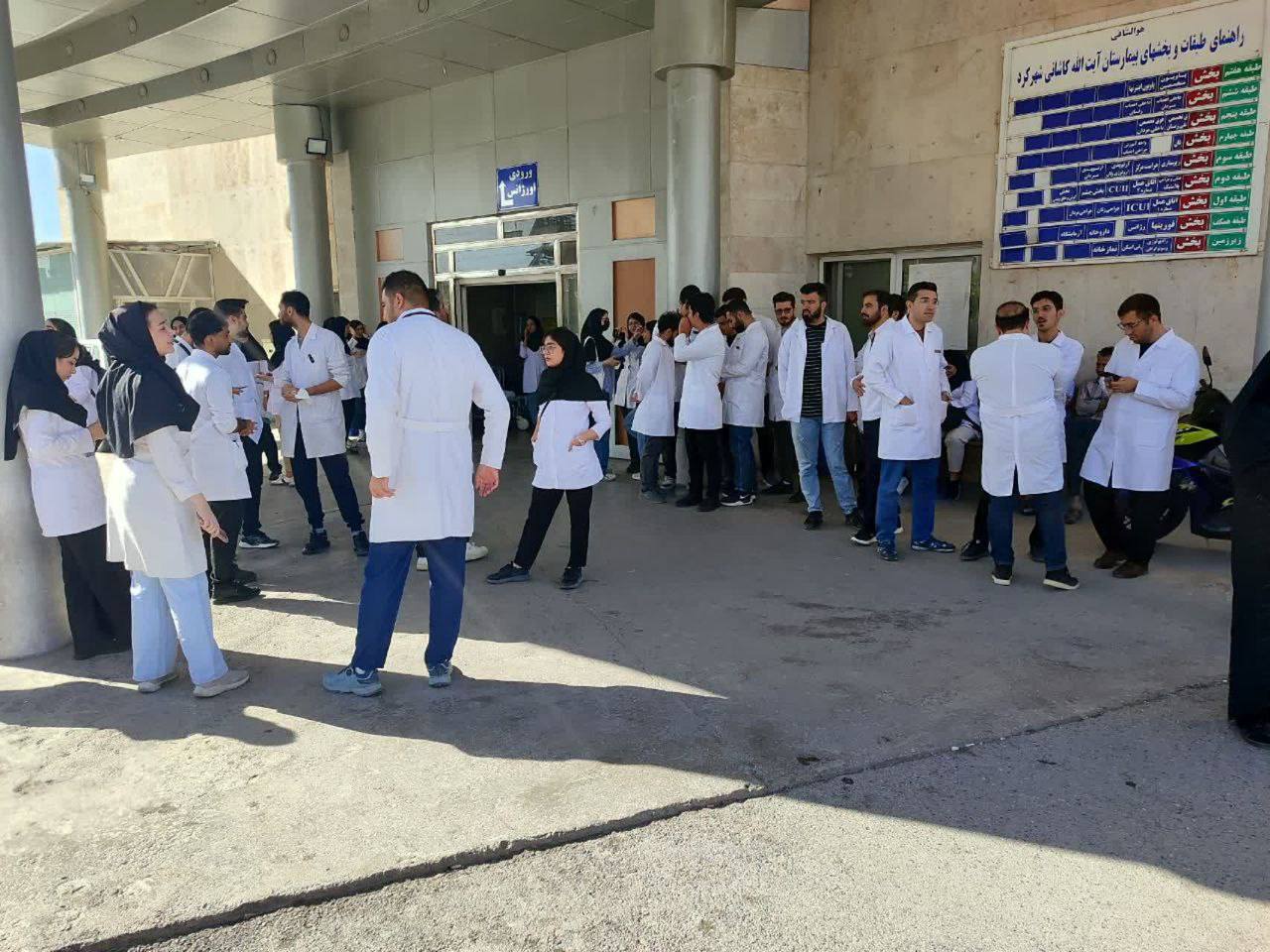
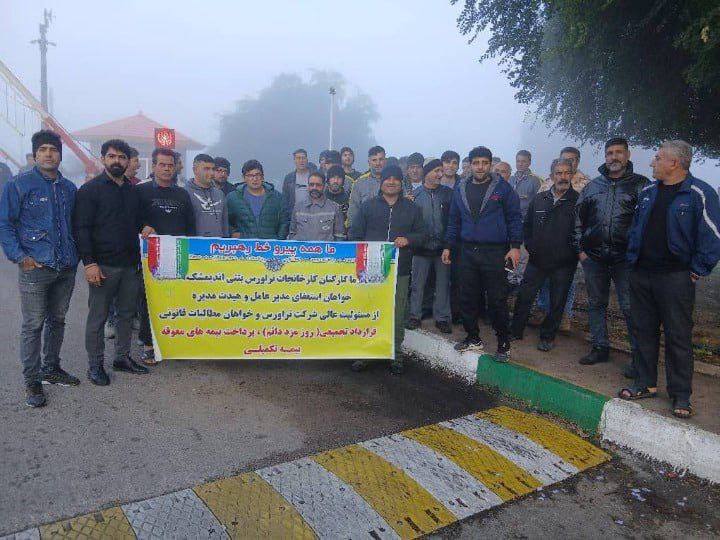
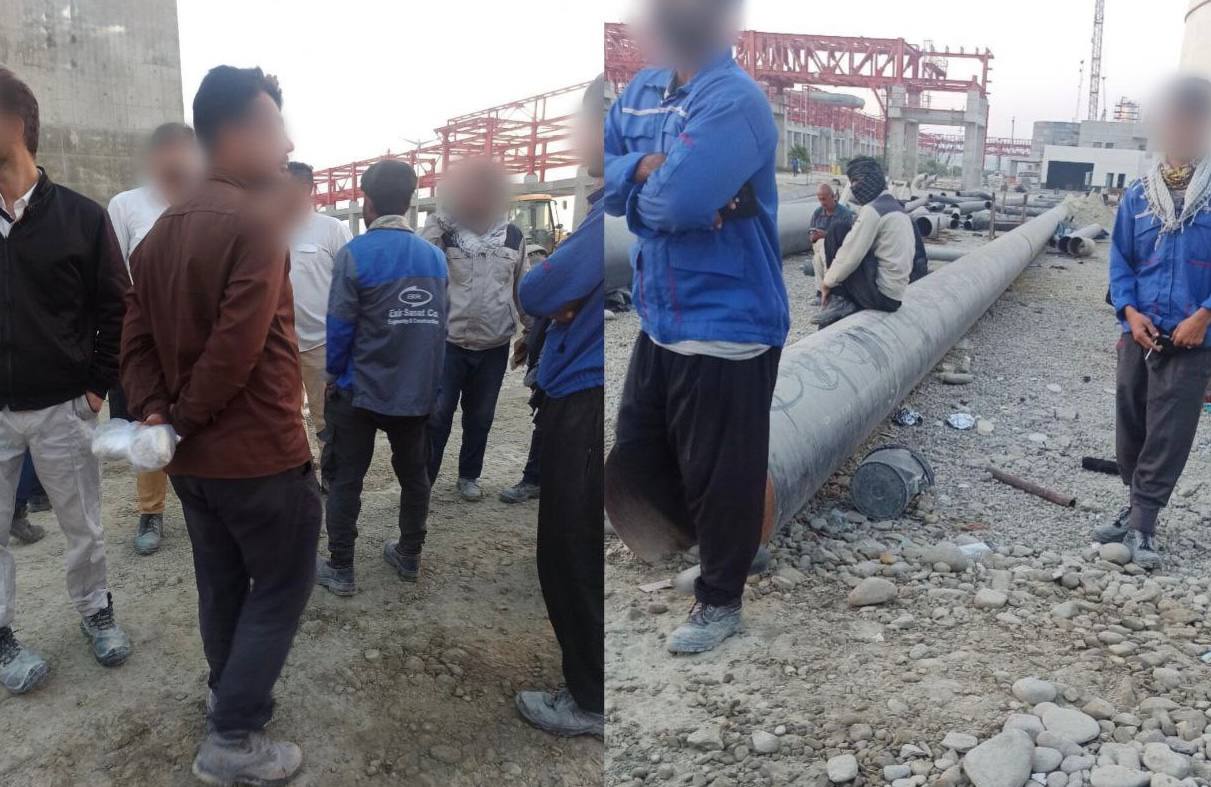
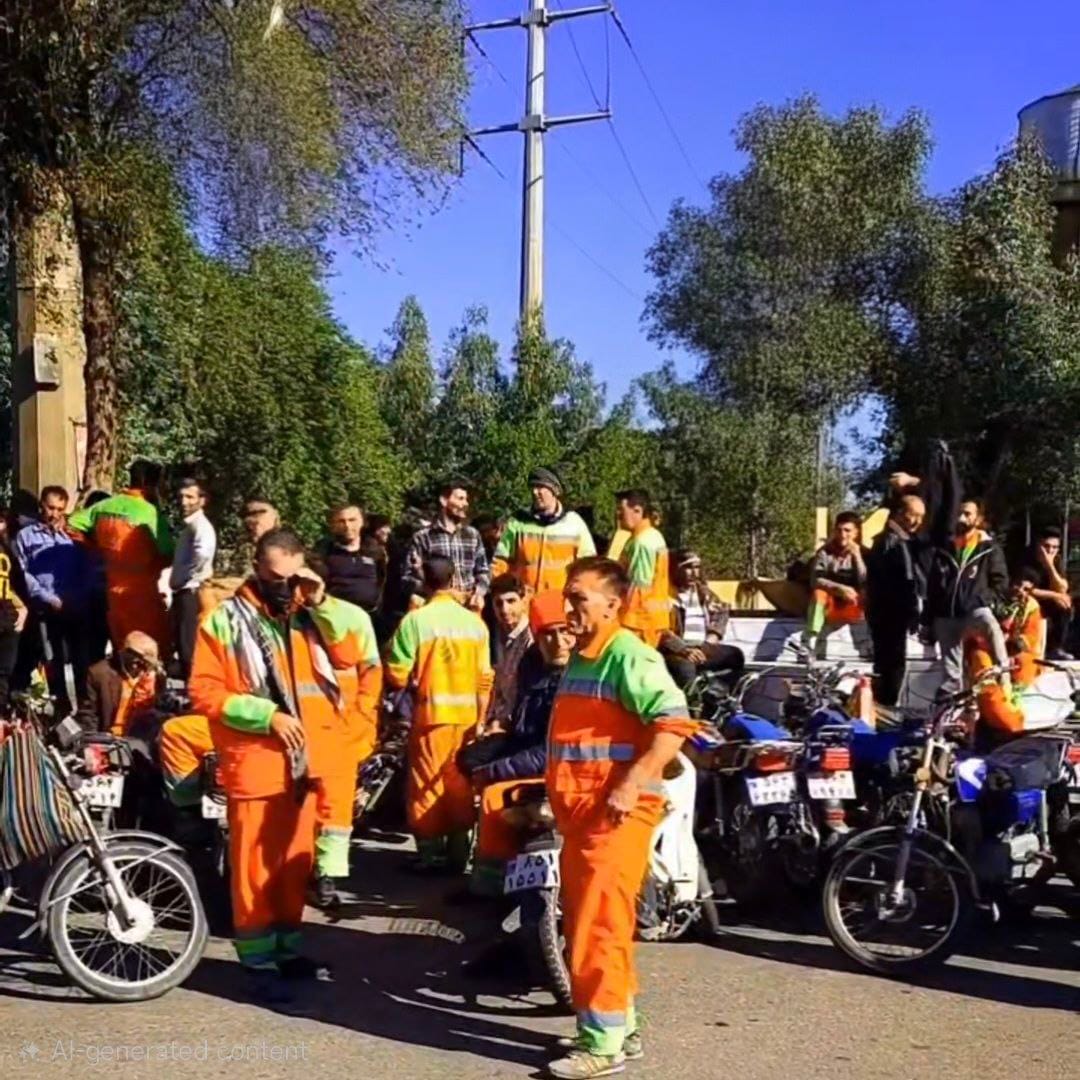
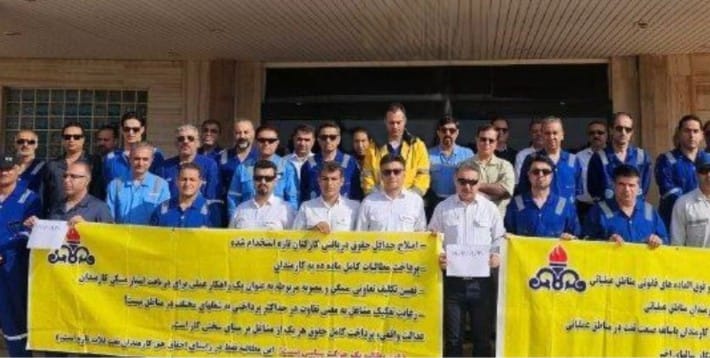
While various labor groups in Iran are deprived systematically of their own union and syndicate, their protests and gatherings continue under police pressure and threats. photo public domain
Prashad’s prescriptions don’t match Iran’s reality
Prashad is right to say sanctions are “illegal” and “destructive,” and that they are a “key” factor. But at the same time, he pushes several other claims that are controversial: Iran must “build intellectual capacity”; it should “look to the East”; it must work “inside history” and abandon a “politics of purity.” The problem isn’t only that some of these claims are imprecise or simply wrong. The deeper problem is that once the main variable in Iran’s domestic politics—systematic authoritarianism and intense anti-left repression—is removed from the analysis, these ideas combine into an impossible roadmap.
You can’t prescribe “academic dialogue and rebuilding theoretical capacity” in a country where independent organizing can land you in prison, and left-leaning writers and researchers are hunted down, jailed, or destroyed—and then expect a real economic alternative to come out of it. You can’t ignore the role of securitization and the regime’s regional policy in producing crisis, and then reduce everything to “the distortions of sanctions.” You can’t say “I’m not getting into domestic politics,” while calling domestic critics “purists,” and then lecture people about realism. And you can’t reassure your audience with a line like “China and Russia are not imperialist” without discussing Iran’s weak bargaining position, the rent networks, the lack of transparency, and the risk of emergency dependency.
If we want to compress this critique into one clean formula: sanctions are the outer lock; the regime is the inner lock. Sanctions bend the economy; the regime turns that bend into an “accumulation model.” And any analysis that sees only one of these will eventually serve either the West’s pro-sanctions narrative—or the regime’s internal justifications.
The final point isn’t purely “theoretical.” It’s practical. The standard for any policy, any alliance, and any “pivot” should be simple: does it strengthen the right to organize, the safety of activists, wages, public welfare, transparency, and accountability—or not? If the answer isn’t clear, being anti-sanctions can quietly slide into the language of “endure it”—the same language that has been grinding people down for years. In Iran, defending society means doing two things at once: exposing the external siege, and exposing the internal machinery of repression and plunder—without letting either one become a shield for the other.
© Copyright IranDraft
We are dedicated to looking beyond headlines.
We bring the full story and context to you when it comes to news from Iran.
See also:
Gaza Beyond Metaphor: On Hamid Dabashi’s Civilizational Ethics