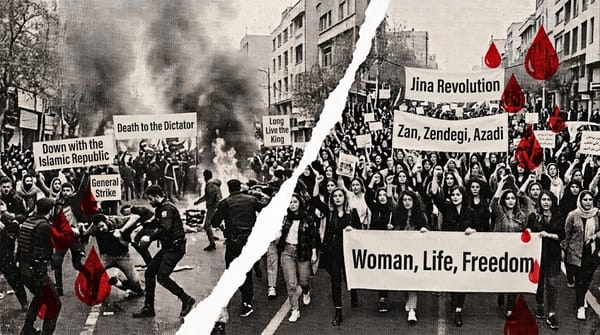
War and Resistance
A Radio Payam Conversation with Abdee Kalantari and Siyavash Shahabi.


A Radio Payam Conversation with Abdee Kalantari and Siyavash Shahabi
The following text was transcribed directly from Radio Payam’s television program, April 26, 2026.
In this discussion on the war and its consequences with critical remarks on the “Resistance Axis,” we hear a conversation with Abdee Kalantari and Siyavash Shahabi.
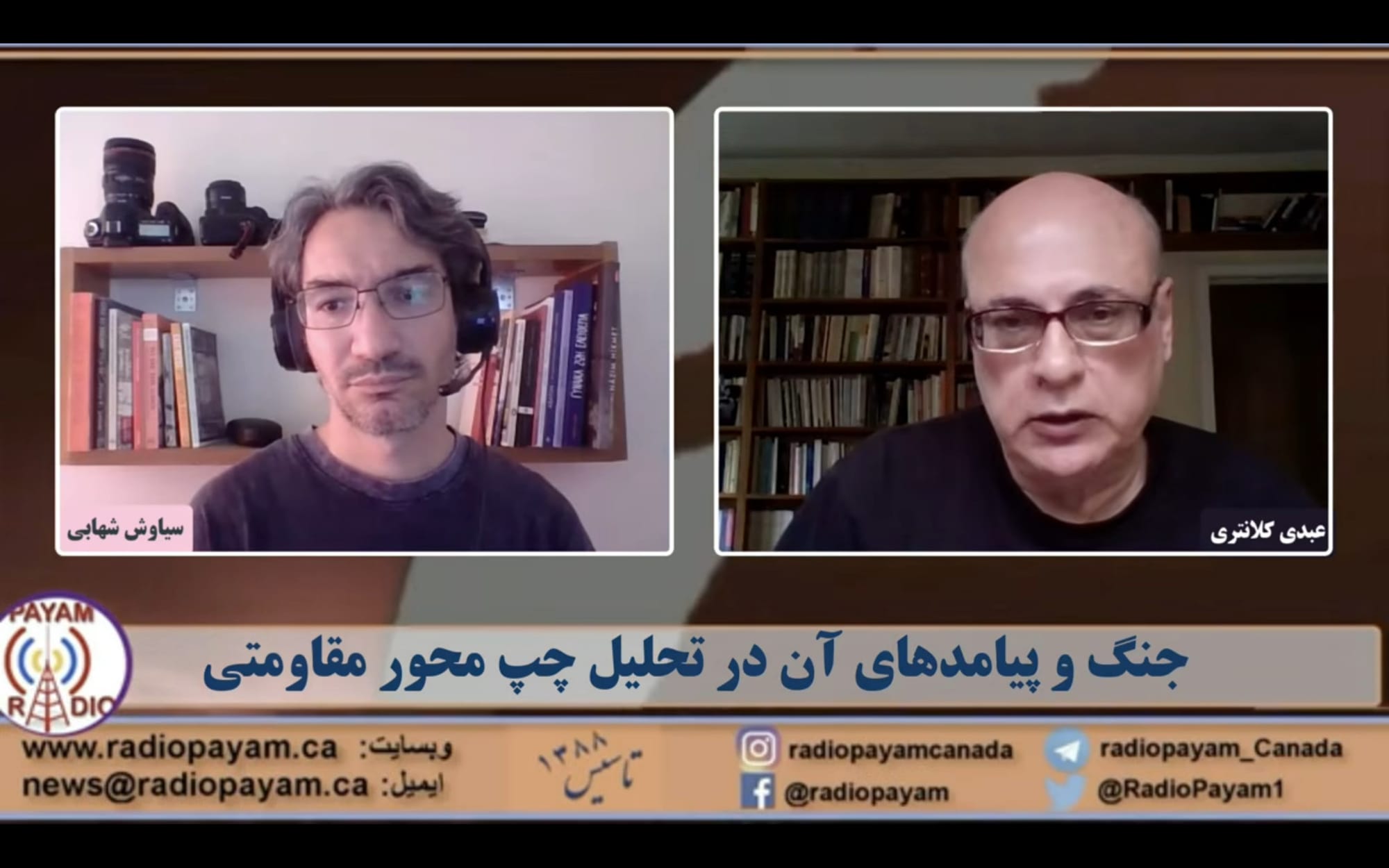
Amir Payam:
Warm greetings to both of you. This is the first time either of you has appeared on Radio Payam, so welcome, and thank you for taking the time to join us. Today is April 26, 2026. The news today reported that Amer Rameshi was executed on charges of ‘baghi’ [armed rebellion against the Islamic statein Iran]. Yesterday, Erfan Kiani was also executed. We hear reports of executions every day now. Yesterday, authorities also announced the arrest of 250 people across different cities.
Abbas Araghchi, the foreign minister, was in Muscat today and is now heading back to Islamabad. We keep hearing contradictory statements from both Iranian and American officials regarding war and ceasefire negotiations. Israel remains silent. Pressure is increasing, repression inside the country is intensifying, and the internet shutdown has now lasted nearly two months.
Given all this, Mr. Kalantari, let me start with you. I tried to sketch a brief picture of the current situation. If there are other aspects you think are important for understanding the present moment, the war, the ceasefire, and so on, please explain them. Then Mr. Shahabi can respond, and afterward we can move more deeply into how these analyses are being formed and how they should be evaluated.
Abdee Kalantari:
Right now we’re in a situation that is neither war nor peace, a semi-stable ceasefire. Negotiations appear to be underway, but under conditions where we don’t really trust the Iranian delegation to represent the interests of the people, and we certainly don’t trust the invading powers either.
Any analysis of this situation, especially a normative or prescriptive one, has to begin from a basic principle: the interests and well-being of the people come before the Strait of Hormuz, before uranium enrichment, before stockpiles of enriched uranium, and before any other tactical achievement.
That point is extremely important. Behind every military or defensive strategy there is always a political vision. That vision can be oriented toward peace, or toward continued war, perhaps in the hope of achieving greater victories.
If the reports I read in The New York Times are accurate, based on interviews with certain state officials, there seems to be a division within the Iranian leadership. One faction appears to want some form of agreement, without surrendering, because this is not really about surrender, and to bring the war to an end through a relatively stable peace.
But there also seems to be another faction arguing that, with the gains they believe they’ve achieved through this asymmetric war, they can keep pushing further, turning a relative victory into an absolute one. Their ultimate goal would be forcing the United States entirely out of the Persian Gulf.
Interestingly, we see the exact same line of thinking in the propaganda of what’s called the “Resistance Axis Left (چپ محور مقاومت).” If you’ve been following the recent discussions in Ali Alizadeh’s circle, the Jedaal channel, which is basically the core of that current, they are saying precisely this. They argue that Iran must not submit to colonial structures in the Gulf, and that it should keep advancing, keep attacking, and make these gains permanent until America packs up and leaves the region entirely.
“A Dangerous Fantasy”
In my opinion, this is an extremely dangerous perspective. It’s a form of fantasy-selling, very similar to what the Israeli-aligned diaspora opposition is also selling. They say: yes, we can absorb endless destruction to infrastructure, we have resilience, continue the war until victory.
The foreign-backed opposition says: continue the war until the regime collapses.
These people say: continue the war until America leaves the Gulf.
In some ways, they mirror each other. Both sides ignore the interests of ordinary people, the destruction of infrastructure, and the possibility that conditions could become vastly worse. Iran’s infrastructure has already suffered enormous damage. People’s entire lives and livelihoods are hanging on these decisions.
I’m not especially optimistic. Though I’m not entirely pessimistic either. Still, I do think the resistance and defensive capacity the regime showed against these two armies deserves a certain degree of recognition, because nobody expected it. Two of the most powerful and dangerous militaries in the world attacked Iran. They dropped more bombs than they did on Iraq or Syria, by far, and despite that, the Islamic Republic managed to resist in its own way.
“Resistance Does Not Mean Trust”
But as I said, this is still a government we fundamentally do not trust. Just two months ago it carried out one of the worst massacres in contemporary Iranian history. Right now it has cut the population off from the internet, and as you mentioned, the number of executions keeps rising. The atmosphere of repression is tightening rapidly.
All of this shows that the regime does not regard the people as its own, and the people do not regard the regime as theirs. So no matter how significant those defensive achievements may be, that does not mean we should simply fall in line behind the state and approve every decision it makes.
Amir Payam:
Later on we’ll come back to this idea of the “Resistance Axis Left” that you mentioned, who they are, what they stand for, and what exactly they’re saying. It’s also interesting that the right-wing opposition and this resistance-oriented left seem to converge at a certain point and produce a similar outcome. That’s worth examining too.
Mr. Shahabi, how do you assess the current situation? What do you see happening?
Siyavash Shahabi:
Hello to you and your listeners, and thank you for inviting me onto the program.
A number of important points have already been raised. But I think one issue that urgently needs attention, alongside everything else we discussed, is the question of daily life and livelihoods in Iran.
We are witnessing massive layoffs and widespread dismissals across workplaces. Because there are no independent labor unions and no independent media, we don’t have precise data. All we can really do is piece together a rough picture from the reports and fragments of news that are emerging about this wave of unemployment and firings.
Part of it stems from the severe damage inflicted on industries. Another part comes from the broader economic conditions. Employers are now “downsizing,” as they politely call it, meaning they are firing workers.
And then there’s the internet shutdown. According to the Minister of Communications himself, around ten million people have been directly harmed by it. That is an enormous number.
Beyond that, we also have to consider the huge population of people who survived through street vending or other forms of informal work. Their livelihoods have essentially vanished. The same goes for people who relied on the internet to sell what they produced, whether from home workshops, small family businesses, or tiny manufacturing units, directly to consumers without middlemen. All of that has been devastated. Everyone has been negatively affected.
And now we’re moving toward a situation where the government is openly selling a form of class-based internet access.
“They Shut It Down, Then Sell It Back”
That’s the issue. As Abdee pointed out, this regime is fundamentally untrustworthy. It’s outright kleptocracy. They shut down the internet under the pretext of “security concerns,” and now they’re selling access back to people at two, five, even ten times the normal price. And nobody can stop them. They’re just doing it openly.
Another point I want to mention before we move deeper into the discussion is this: despite everything that has happened, despite the war that was imposed on Iran, if we look at Iran as a geopolitical body, and also at the position of the Islamic Republic itself, the war has already happened. It was imposed.
My own analysis is that the United States and Israel made a serious miscalculation. They seemed to think that if they killed a few key figures, perhaps massive protests would erupt or the state structure would simply collapse. But their understanding of the Iranian state was fundamentally flawed. They did not actually understand how the institution of the state functions in Iran.
And honestly, I think part of the Iranian opposition suffers from the same misunderstanding. They don’t really grasp how the state apparatus works in Iran. Their thinking is often very simplistic: you have a pyramid, remove the people at the top, and the whole thing collapses. But no, not necessarily. That’s not how state collapse automatically works.
So yes, they made that mistake.
The Strait of Hormuz as Leverage
Another factor is the Strait of Hormuz. I don’t even think regime officials or their strategists fully anticipated how important an instrument it would become.
Until recently, Iran indirectly controlled perhaps six or seven percent of the world’s energy flow. Suddenly, because of Hormuz, that number jumped above twenty percent. And it’s not just energy. Fertilizer production, shipping routes, all kinds of critical global supply chains depend on this region. Suddenly all of that became leverage.
That gives Iran, as a geopolitical entity, a certain advantage in the region and globally. But that leverage also has limits. The Islamic Republic cannot endlessly play this card as though it were an unstoppable trump card.
And this is exactly the point Abdee raised very well: this is where people begin selling fantasies under the name of “resistance,” fantasies that don’t really correspond to material reality on the ground. Yes, it creates certain advantages. But it also has clear limitations. You can’t endlessly gamble with it. That’s something people need to be very careful about.
“A Brutal Regime That Cannot Protect People”
The reality is that the Islamic Republic has repeatedly proven itself to be deeply ruthless toward the people of Iran, toward their lives and well-being. It simply does not care what happens to ordinary people.
And the truth is, it barely even has the capacity to defend them.
Yes, there’s an army. There’s the Revolutionary Guard. They exist. Any state under attack will naturally try to defend itself in order to preserve its rule. But they simply don’t have the actual capacity.
In those first days, almost everything collapsed. It had already been obvious for years that beyond missile capabilities, which they did develop extensively, they had virtually nothing capable of defending cities or protecting the country itself.
When Sanandaj was bombed, even I was shocked, shocked by the scale and intensity of it. I remember thinking: you have absolutely nothing to defend people with. After all that swagger and chest-thumping, what exactly was all that supposed to amount to?
Every time something happened, Khamenei would threaten to destroy Haifa and Tel Aviv. Then suddenly we saw Tehran itself being destroyed.
Neither the slogans nor the reality matched.
“Selling Dreams Through Martyrdom”
And there’s another issue too. This is an ideological state. It knows how to exploit martyrdom and sacrifice for political purposes.
We saw that after the Minab school massacre carried out by the U.S. military, an outright atrocity where children were killed. The regime immediately transformed it into massive propaganda for itself.
And that’s precisely why this fantasy-selling is so dangerous.
Amir Payam:
Thank you. We’ll return to the domestic dimension in a bit if you agree.
Mr. Kalantari, the geopolitical question was raised. In the latest negotiations in Islamabad, for example, the Islamic Republic reportedly tied the issue of Hezbollah in Lebanon to the negotiations themselves, insisting that a ceasefire there also had to be part of the deal, which to some extent appears to have happened.
Right now we’re seeing Israeli silence, or at least a retreat from what seemed to be its earlier objectives, even if only temporarily. The whole network of allied forces the Islamic Republic built over the years, despite all the ups and downs, now seems more connected to the regime’s interests than to the interests of people inside Iran.
At the negotiating table, far more attention is given to preserving Hezbollah, Hashd al-Shaabi, or the Houthis than to the lives of ordinary Iranians. From neither side do we hear serious discussion about things like the internet shutdown, stopping executions, and so on.
Why do you think these regional interests matter so much to the regime? Whether on the American-Israeli side or the Iranian side, the interests of ordinary people in Iran seem completely absent from the negotiations.
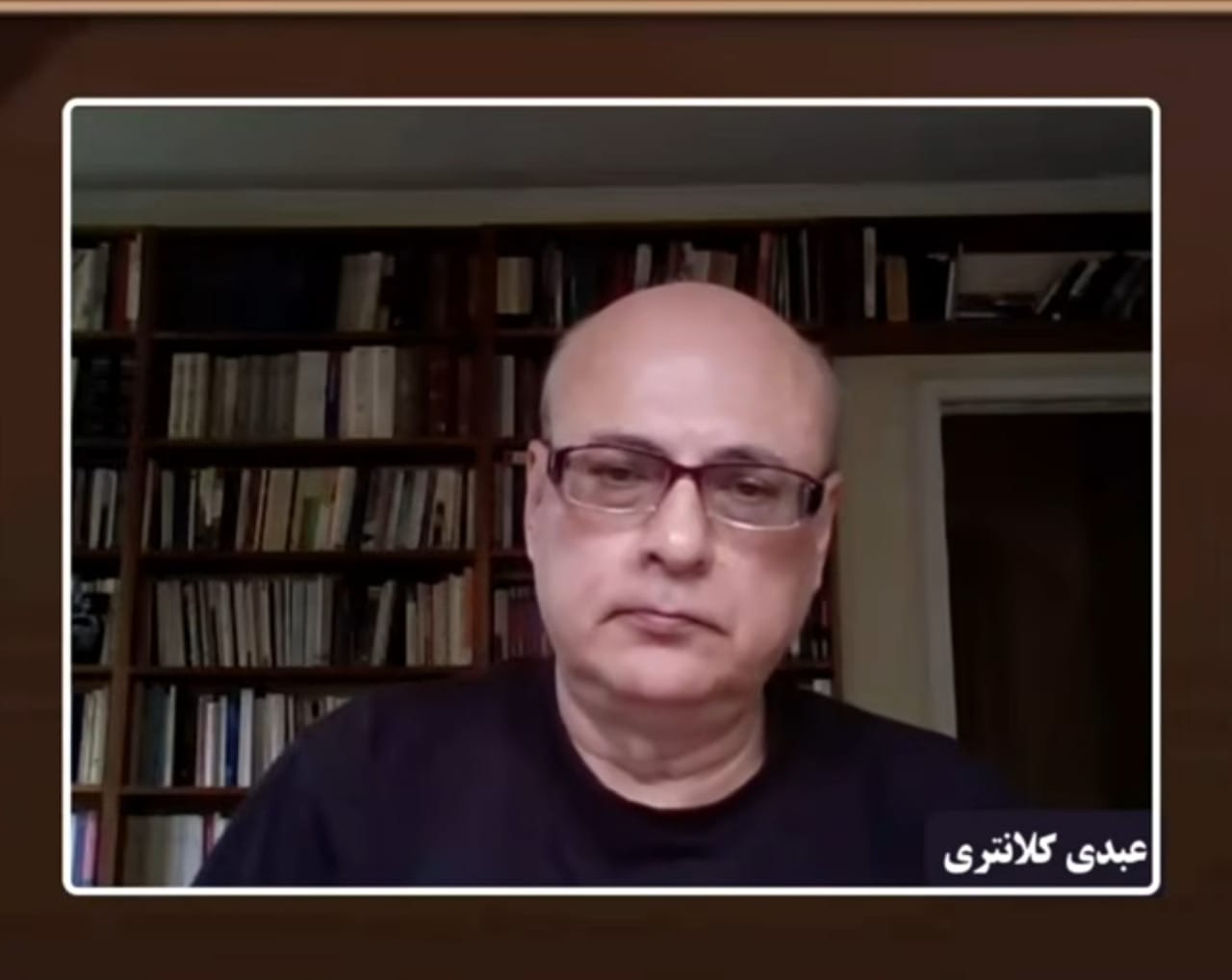
Abdee Kalantari:
First of all, I’d prefer not to use the term “Iranian proxy” when referring to Hezbollah.
But to answer your question, there may be two reasons for this.
One reason, which we’ve known for a long time, is that the Islamic Republic, because of its Shi’a theocratic structure from the very beginning of the revolution, developed a kind of religious-political solidarity with ideologically aligned groups across the region. Hezbollah in Lebanon is one branch of that alignment.
That does not mean Hezbollah is simply a military unit belonging to the Iranian state. Lebanon has its own internal dynamics, and Hezbollah has deep roots there. And Hezbollah is not identical with the Palestinian resistance either. Those are separate issues.
War Calculations and Tactical Leverage
But because we are currently in the middle of a war, I think the Islamic Republic is calculating in military terms. One front of this conflict is Lebanon, where Hezbollah’s missile operations in support of Iran are part of the broader battlefield.
From the regime’s perspective, that front also becomes a bargaining chip. In other words, if Hezbollah is weakened or suppressed further, then in this multi-front war, especially if the Houthis become more directly involved later on, Iran’s position would be weakened as well.
So the regime is trying to secure concessions around that issue during negotiations. This is essentially a military and tactical calculation.
Naturally, the interests of ordinary people in Iran do not play much of a role in these calculations.
“What Do We Actually Mean by Resistance?”
Later on, we can perhaps discuss the broader framework of “resistance” itself, whether the concept of resistance, as many of us understand it, can genuinely be applied to the foreign policy of the Islamic Republic, or whether it cannot.
Amir Payam:
Mr. Shahabi, you spoke about the catastrophic conditions facing ordinary people. You mentioned massive unemployment. But even before the war, we were already seeing the Islamic Republic struggling with multiple overlapping crises, from water shortages to economic hardship, environmental collapse, and failures in public services.
Now the war has been added on top of all that.
You mentioned unemployment. Take just two concrete examples: steel production, where, if I’m not mistaken, around seventy-five percent of capacity has gone offline, or petrochemicals, where entire chains of production have been disrupted. Some factories supplied raw materials, others depended on those materials for their own production. Once one link breaks, unemployment spreads far beyond a single factory.
So we’re facing a massive wave of job losses. At the same time, the purchasing power of workers, and even parts of the middle class, seems to be shrinking day by day.
How long do you think this situation can continue? And while war may be a “blessing” for the regime politically, do you think the Islamic Republic can actually emerge from this war intact?
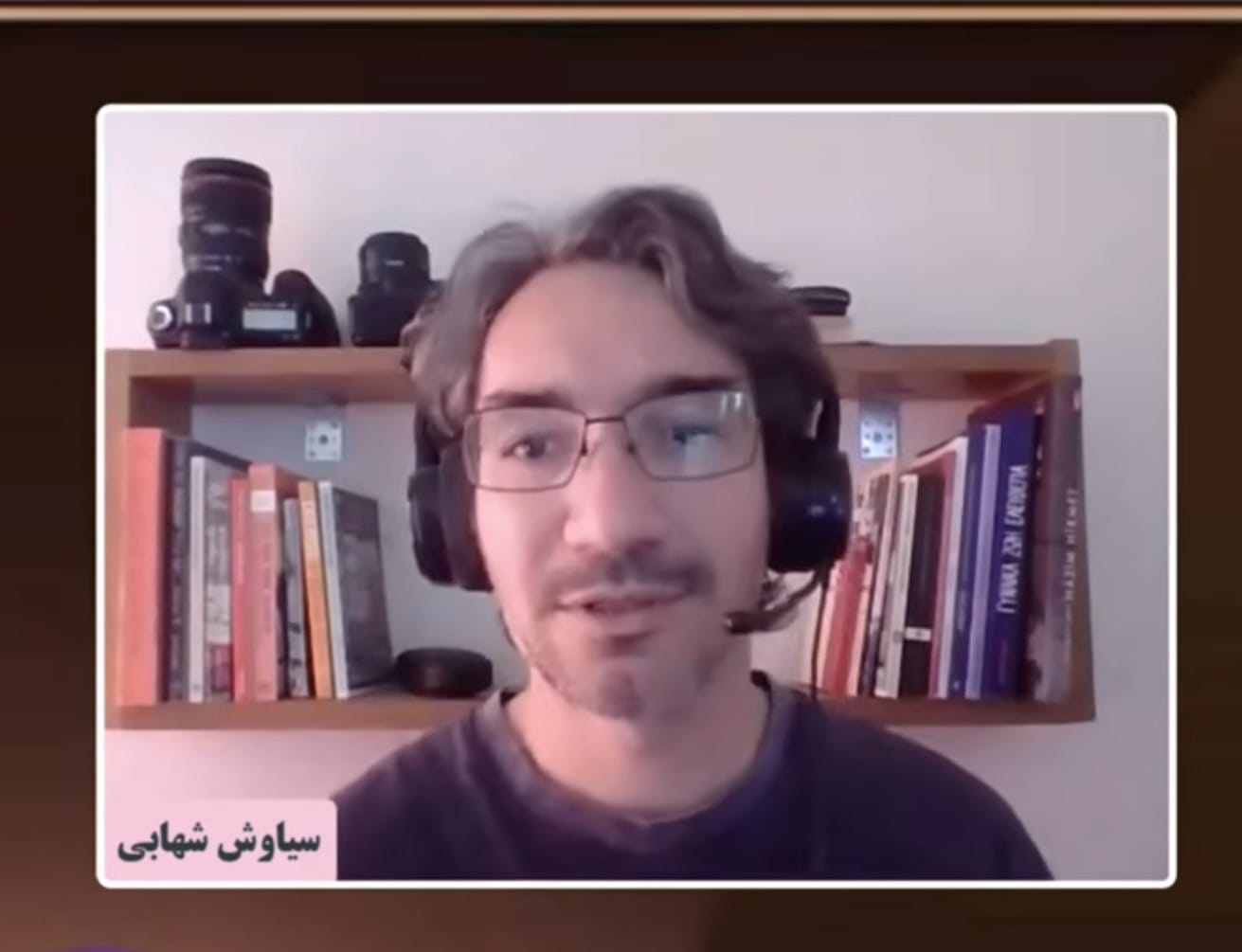
Siyavash Shahabi:
I think it’s important to dig into the past a little. Because if we focus only on the last few months, we won’t find a real explanation for this situation.
Back in 2007 or 2008, I think it was around then, the House of Labor tried to organize a May Day event in Tehran’s Shiroudi Stadium. Workers managed to force the gates open and bring their protest into the streets. It turned into a major march. People were carrying a symbolic “coffin of labor law.” They were protesting low wages, delayed salary payments, layoffs, youth unemployment. We were there ourselves, carrying banners about unemployment, along with many others.
So this issue is not new. It’s not something that started yesterday. It goes back a very long time. And the Islamic Republic’s response has always been the same: repression, repression, repression. No independent organizing allowed.
Then the nuclear program became the central issue, and suddenly all of the regime’s propaganda shifted. Everything became about the nuclear file, sanctions, and external pressure.
But that was never the full story.
“Sanctions Are Real, But So Is Systemic Theft”
Yes, sanctions exist. Economic sanctions have had an impact. But fundamentally, we are dealing with disastrously bad management, intentionally bad management.
Workers are being exploited. Their rights are stripped away piece by piece and thrown aside. And every time they protest, the regime says: “We’re under sanctions. We’re fighting the West.”
But that’s not the whole reality.
You can have sanctions and billion-dollar embezzlements at the same time. You can have sanctions while oil rigs mysteriously disappear. You can have massive corruption scandals inside the Social Security Organization, the very institution that’s supposed to pay retirees.
This has always been the pattern.
My father worked as a driver for the Tehran bus company. He’s retired now. Whether he was working back then or retired today, delayed wages have always been part of life, months-long delays. And this was twenty years ago, before today’s war, before sanctions had reached this level. The sanctions of recent years certainly intensified things and made conditions worse, but the underlying crisis was already there.
Oil Wealth and Misplaced Priorities
At the same time, remember that during Mahmoud Ahmadinejad’s presidency, Iran became an extraordinarily wealthy country in terms of oil revenue. Massive oil money poured in.
What happened to that money? Where did it go?
Part of it, of course, went into missile industries and military projects instead of rebuilding or developing other sectors.
We also saw huge water-management projects, dam construction and diversion schemes that had devastating consequences. These policies damaged livelihoods across different regions of Iran and created further unemployment.
Look at the protests in recent years. Some of the largest demonstrations erupted in the central Zagros region. That area is now suffering severe water shortages, despite having undergone some of the country’s most extensive dam-building projects.
These projects destroyed the ecological balance of villages and smaller towns. People who once survived through seasonal labor patterns, working locally for part of the year and migrating elsewhere for work during other months, found those livelihoods collapsing.
This wasn’t unique to one area. We saw it in Kurdistan too. It was always common for friends of mine to spend five or six months together locally, then leave for industrial cities to find work for the rest of the year.
But in the past decade, this pattern intensified dramatically.
If you look at the protests from November 2019 through the recent January uprisings, the heaviest concentration wasn’t necessarily in the biggest cities. It was in central Zagros regions, among people who returned home during winter only to face unemployment combined with soaring prices.
And then came even harsher repression.
“The War Deepened an Existing Collapse”
So the issue isn’t simply that a war suddenly happened and directly damaged industry. Yes, the war has devastated interconnected sectors. In petrochemicals, for example, some facilities lost their primary electricity suppliers, and in Mahshahr alone as many as seven hundred workers lost their jobs.
We’re seeing the same thing in steel production. Three or four major industrial sectors have been heavily damaged by the war.
Now the question is: what plan does the government actually have for reconstruction? And with what money?
Even if the funding somehow appears, and here I return to Abdee’s earlier point, how can anyone trust a government that operates with zero transparency and zero accountability?
Last week they gathered engineers from Khuzestan Steel for reconstruction meetings. Fine, good, they’re engineers, that’s their profession. That’s what they trained for.
But then you ask: where are the workers? Where are the labor representatives? The seventeen-thousand-strong workforce that actually runs the industry had no representation in those meetings at all.
And yet those are the people who will be asked to work longer hours, or face restructuring, or absorb the burden of rebuilding. How exactly are their wages supposed to be paid?
That’s why, to connect this back to the earlier discussion, yes, for the Islamic Republic right now, what happens to the Houthis or Hezbollah matters more than what is happening to millions of people inside Iran.
Amir Payam:
Thank you. Mr. Abdee Kalantari, given everything that has been said, both by you and by Mr. Shahabi, let’s return to the point you raised earlier about the “Resistance Axis Left,” how it defines itself and what kind of solutions it proposes.
Anyone listening to this program might first ask: “What left are we even talking about? And how did a ‘Resistance Axis Left’ emerge from it?”
If possible, could you explain how you define this current, this “Resistance Axis Left”? And why does it sometimes end up converging with parts of the far right, or arrive at similar conclusions regarding strategy and political goals?
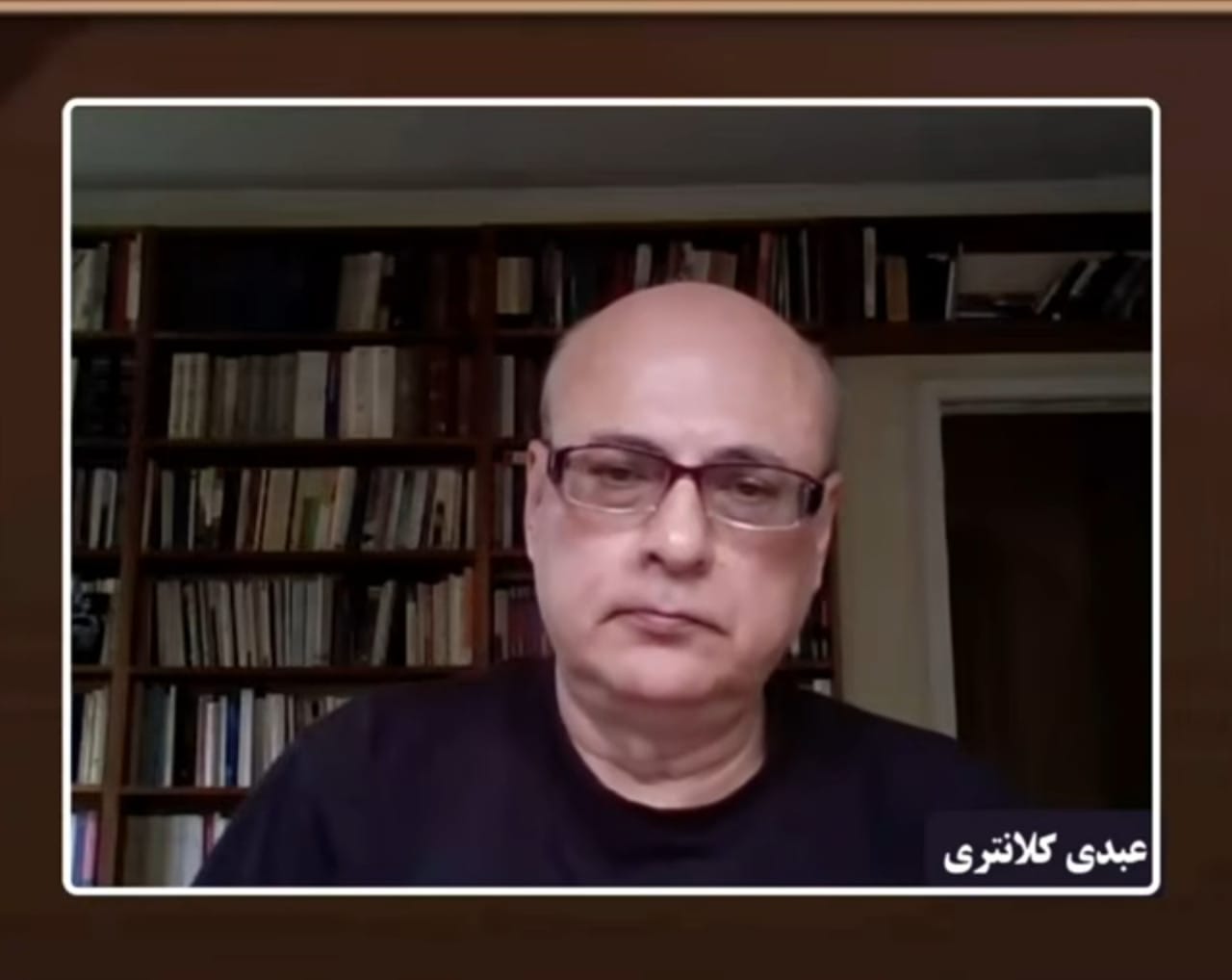
Abdee Kalantari:
These aren’t really academic definitions. These are terms that emerged in journalism and political commentary, and naturally they always depend on a certain context, a particular historical and political setting.
And the context changes dramatically between peace and war.
I’m trying to think of the clearest way to explain this, because what Siyavash said earlier is extremely important. It brings us back to the nature of the regime itself, a rentier capitalist system governed by military and clerical oligarchies.
But I want to draw a sharp distinction between conditions of peace and conditions of war.
When war begins, a new situation suddenly emerges. From this new vantage point, we are forced to look back at history differently and notice things we may not have fully seen before.
Whenever we described the misery of life under the regime, the repression, the inequality, the social discontent, many of us tended to think: “Surely things can’t get much worse than this.”
But there were always political forces warning that yes, things could become much worse. Under war conditions, those warnings take on an entirely different meaning.
Three Social Goods: Independence, Freedom, Justice
Let’s call this a methodology.
In every society there are three social goods: independence, freedom, and social welfare, or if you prefer, independence, freedom, and social justice.
And none of these are zero-sum categories. That’s extremely important.
Any analysis of the situation has to begin from that principle.
Take living conditions, for example. A family may be struggling terribly and would never consider itself prosperous, but perhaps they still have electricity. Their refrigerator still works. Their stove still functions so they can cook food.
Now imagine even those remaining things are taken away. Their condition becomes worse still.
So material well-being is not an all-or-nothing matter.
The same is true of peace.
“A Liberation War?”
That’s why I think it’s deeply dishonest when some people claim that the entire past forty-seven years were already a kind of invisible war, and now they try to package this new war as a “liberation war,” selling it as the event that will finally end that earlier conflict.
To me, that is pure demagoguery.
We must make a clear distinction between conditions of war and conditions of peace.
In peacetime, society has its own internal dynamic. Every country, every society, and I prefer to say “Iranian society” rather than invoke nationalism, contains internal mechanisms of conflict and contradiction.
Different social forces are constantly struggling against one another. These dynamics are internal. We might call them class conflict, or the contradiction between civil society and the state. Philosophers from Hegel to Marx to Gramsci discussed these tensions. They are permanent features of social life.
And again, these conflicts are never absolute or zero-sum.
What War Does to Society
But war changes everything.
War comes from the outside and strikes society with such force that the entire internal balance becomes distorted. It twists and deforms the normal mechanisms through which society processes its own contradictions.
Let me use a natural metaphor.
Imagine a society where class struggle exists, women’s struggles exist, social movements exist, people are fighting for change. Then suddenly you hear that a meteor is hurtling toward the country from outer space and may destroy everything. Or imagine a massive earthquake.
Naturally, everyone’s attention shifts toward that threat.
At that point, you are no longer living under normal peacetime conditions.
“You Cannot Open Two Fronts While Bombs Are Falling”
Under these circumstances, the Iranian left is no longer operating in peacetime conditions where it can say: “We can open a third front. We can fight imperialism and colonialism while simultaneously fighting the domestic regime.”
No.
Because the external force descending upon society does not belong to our internal social dynamics. It overwhelms and overshadows everything internal.
The same applies to the diaspora. Iranians outside the country are still part of Iranian society. I don’t define society merely as a geographical territory. Millions of Iranians live across the world and remain part of this internal social conflict.
But the moment they surrender their political agency to another state, the moment they enter Iranian politics under the flag of a foreign government, they are no longer functioning as part of that internal organism. They become part of the external force crashing down from outside, like the meteor in my example, making conditions worse for everyone living beneath it.
Now imagine that meteor were somehow conscious and capable of making decisions. Could it really say: “I only intend to strike the head of the snake, I’ll leave everything else untouched”?
Or could we down here calmly calculate and say: “Fine, come destroy the regime, we’ll stand aside until you finish the job”? Or worse: “We’ll help you destroy it”?
No.
Faced with an external threat of that scale, defensive lines become unified. Anyone genuinely concerned about the survival of society gravitates toward defending society itself.
“Go Stand Behind the Defensive Line”
Now if someone says to an independent leftist like me: “How exactly are you planning to defend Iran against these invading armies? Do you have soldiers? Missiles? Launchers? A navy? If you do, go ahead. If you don’t, then either stay quiet or stand behind the existing defensive line.”
Well, my answer returns to what I said earlier.
Behind every defensive strategy there is a political orientation. That orientation may be directed toward peace and the interests of ordinary people, or it may not be.
So this does not mean that under all circumstances we simply line up behind the Islamic Republic’s military apparatus.
But at the same time, I also recognize that during war it becomes impossible to behave as though we are still living in peacetime, impossible to simultaneously wage war against foreign aggression and conduct ordinary political struggle against the domestic regime.
When bombs are literally falling on your head, when buildings are collapsing around you, you cannot open two fronts at once.
And this is precisely the moment when the “Resistance Axis Left” suddenly gains strength.
A Left Focused Entirely on Security and Sovereignty
The “Resistance Axis Left” is a left whose entire theoretical system revolves around security and national independence. Everything gets filtered through those two concepts.
Ten or twelve years ago, when I first tried to make sense of this phenomenon for myself, the term “Resistance Axis Left” did not yet exist, or at least I hadn’t heard it. I was searching for a name.
What occurred to me at the time was this: this current signals left, but turns right. And by “right” here, I don’t mean colonial or Western conservatism. I mean the conservative right wing of the Islamic Republic itself.
So I started calling it the “neo-conservative left,” or the “neocon left.” Maybe it wasn’t the best label, but I couldn’t think of a better one.
The Jedaal Circle
Like all political tendencies, this current exists on a spectrum. There isn’t just one “Resistance Axis Left.” There are many variations.
But the archetype I had in mind was Ali Alizadeh’s media circle, especially the Jedaal think-tank channel he founded several years ago.
Ali Alizadeh is an extremely intelligent political operator. He emerged from major outlets like the BBC, built his own YouTube network, and because he is highly skilled in performance, rhetoric, and political framing, he managed to attract enormous audiences, fifty thousand, a hundred thousand viewers, and achieved considerable success.
Over time, however, that platform effectively became a playground for Basij-aligned ideologues.
You had figures like Mohammad Marandi, Fouad Izadi, regime theorists, ideological cadres, and younger pro-regime intellectuals connected to military fronts in Lebanon and Syria. Worse than that, they began openly theorizing and justifying the regime’s repression.
“No, the Kurds Killed Kian Pirfalak”
I remember after Kian Pirfalak was killed, the ten-year-old boy who was shot while sitting in a car with his family, they produced multiple programs claiming that Kurdish militants had actually killed him.
They brought in clips, “experts,” fact-checkers, all supposedly proving that regime forces were not responsible, that Kurdish groups fired the shots.
And then, of course, all the unrest was explained as a Mossad-directed hybrid war.
For seven or eight years, their daily and weekly programs revolved around exactly these themes.
But once popular protests intensified, especially during the January uprisings, they began losing credibility. So they temporarily shifted tone and tried to appear somewhat critical of the regime.
Yet the moment war broke out, they snapped right back into their original position. The same rhetoric, the same framework, the same political machinery all over again.
Now, what relationship this “Resistance Axis Left” actually has to the broader Axis of Resistance itself, that’s another discussion entirely.
Amir Payam:
Thank you for the explanation.
Mr. Shahabi, the argument we often hear goes something like this: whatever the Islamic Republic may be, however bad or repressive it has been, it was not the one dropping bombs on the country. Israel and the United States launched a twelve-day war, imposed sanctions, exerted pressure, and now we’re seeing unprecedented bombardment.
Abdee Kalantari:
It certainly has fired bullets at its own people.
Amir Payam:
Yes, what I said is not my personal view, I’m quoting an argument that’s out there. I’m trying to get at a particular current of thought.
The claim is that Iran is under siege now. There are fears that even oil fields could be destroyed. Therefore, the country has to defend itself. The world’s strongest militaries are attacking it, so Iran expanded the conflict into Syria, Lebanon, Yemen, Iraq, precisely to prevent a direct assault on itself.
And now that the attack has happened anyway, the argument says: regardless of the Islamic Republic, this is still your land. Whatever happens to Iran affects the people who live there. Therefore, one has a duty to defend the country. And since the Islamic Republic is the state that officially represents Iran, with its own flag, anthem, and government, what choice does someone sitting outside the country really have except to support those policies, even if they disagree with parts of them?
This view insists that the responsibility of all left and radical forces today is to support that defense effort.
How do you see that argument? How do you define it?
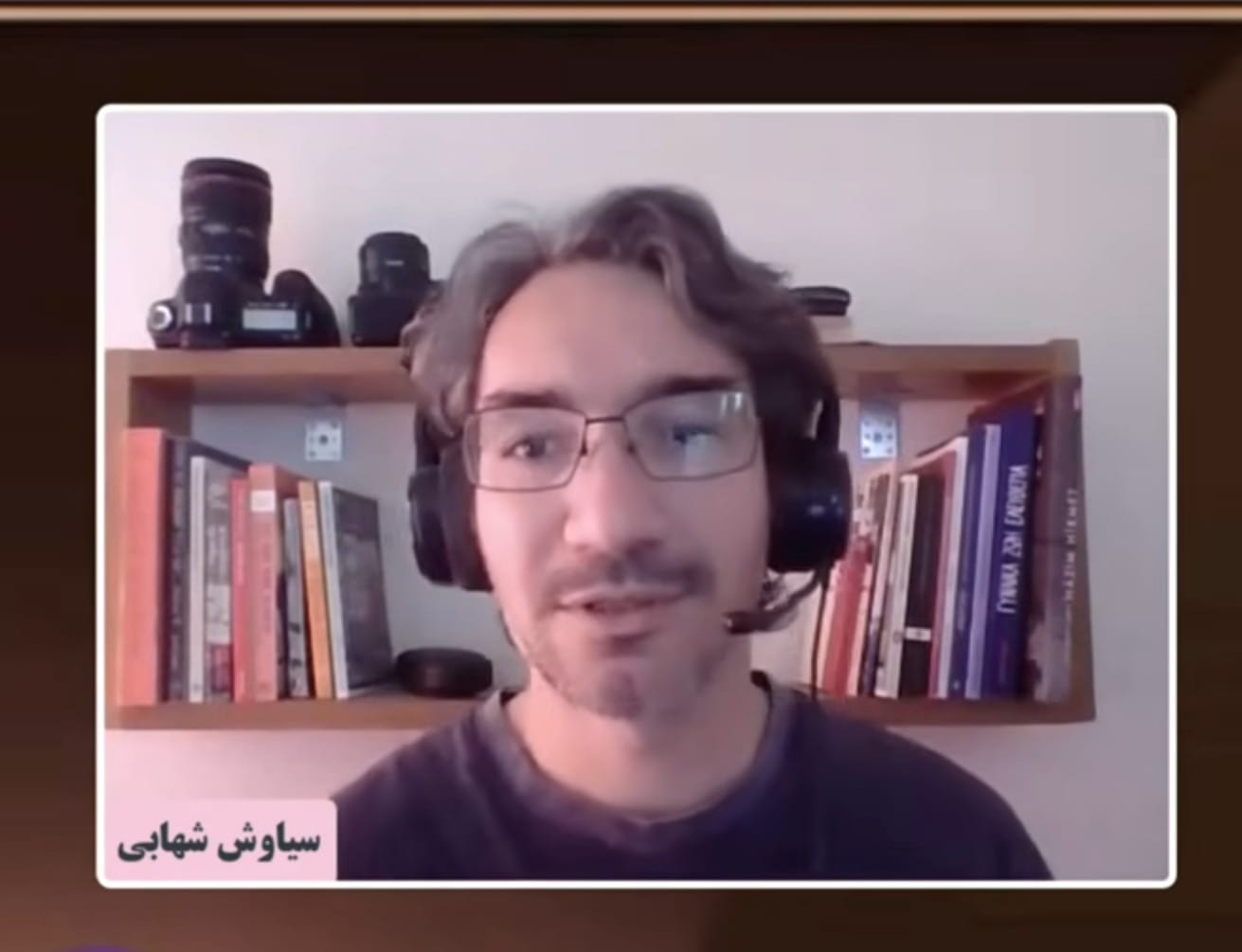
Siyavash Shahabi:
Honestly, I think the question is framed in a very abstract way. And the people who pose it like this often speak abstractly too.
I don’t even want to get into the twenty years of policies that ultimately led to this war. War is the continuation of politics through different means. Things reached this point because these powers could no longer negotiate. They reached a stage where they decided they had to strike, kill, eliminate one another in order to achieve their goals.
Now, one side spent years saying: “If they make the slightest mistake, we’ll wipe out Tel Aviv and Haifa.”
Well, that never happened. Instead, two months later, they still haven’t even buried the corpse of the man who kept making those speeches and threats. Those same slogans and performances inflicted enormous damage on the country itself.
Citizenship Destroyed From Within
I call this argument abstract because we’ve lived under an extraordinarily violent political structure, one that fundamentally distorted many concepts for Iranians, despite the fact that the 1979 revolution itself supposedly happened in order to address these very issues.
Citizenship. Civil rights. The right to shape your own life.
You live in your city, your country, so that you can make decisions about your life, express yourself, organize politically, form labor unions. The 1979 revolution was supposed to be about exactly these things.
When they bombed the city council building in Sanandaj in 1979, that too was about these same questions.
But the violence became so intense that society was divided into insiders and outsiders, “us” and “them.” Anyone outside the official structure became the Other. Their very Iranian identity came under suspicion.
So now there’s a real question: who even counts as Iranian anymore?
The Olympic Moment
Let me give one example.
At the Olympics, we had two Iranian athletes. One competed under Iran’s official flag. The other competed under the refugee flag while representing Bulgaria. The two women embraced each other, and that moment was censored on Iranian television.
Two athletes who only a few years earlier had competed under the same flag, suddenly that embrace became unshowable.
That tells you what kind of system you’re dealing with. A system that dictates what kind of Iranian you’re allowed to be, what kind of Shi’a, what kind of Muslim. It defines all of this in the harshest possible terms.
And from within that framework comes this argument: “If we consider ourselves Iranian, then whoever happens to rule the country, we must defend them.”
Fine, but then the question becomes: what exactly are you defending?
“The Torture Center Was Bombed”
I saw a video after the intelligence headquarters in Sanandaj was bombed. That was the same place where people had been imprisoned and tortured.
Now suddenly smoke is rising from it, the building is collapsing.
I was talking with friends about it, and we all felt something deeply strange and contradictory. How are you supposed to react when the place where you yourself were tortured is suddenly reduced to rubble?
This war puts people in an impossible position.
And remember, even as citizens, we were never actually treated as citizens. We were never allowed to participate in public discussion about issues like the nuclear program or the Bushehr reactor, whether these projects benefited society or harmed it.
Back in 2006, during International Children’s Day events in Sanandaj, we carried banners saying that pursuing nuclear weapons would solve nothing. The Intelligence Ministry interrogated us: “What does this have to do with children’s rights?”
Well, now we know. Because ten or twenty years later you see what those policies brought upon the country. Children in Minab were killed. And countless other consequences directly affecting children’s lives and rights.
So again, the question is: what are you defending, and how are you defending it?
“Someone Has to Defend Against Invasion”
Now, part of this discussion may sound theoretical from outside the country, but inside the country things are different.
Whether we like it or not, there is a force that controls the armed institutions. And when invasion happens, someone has to defend against it.
We had similar debates during the war in Ukraine. Some people in Europe said Ukraine’s government was full of Nazis and so on. And my response was always: fine, but one country invaded another. Someone still has to defend against that invasion.
You confront the aggressor first. You condemn the invasion itself.
A genuine anti-war politics begins there: why did you invade?
“The Islamic Republic Helped Create This War”
But in Iran’s case, the problem is that for twenty years the Islamic Republic actively pursued policies that escalated toward war. It directly contributed to creating this conflict.
During Ahmadinejad’s presidency, suddenly Israel replaced America as the central enemy. Before that, anti-Americanism was the dominant rhetoric. Then came Holocaust denial and all the rest.
From outside the country, I see two major tendencies within the diaspora.
One tendency has spent years trying to explain to the outside world that Iran is ruled by a deeply repressive structure, anti-worker, misogynistic, anti-child, hostile to basic human rights.
The second tendency, meanwhile, seeks political power for itself. It presents a certain version of Westernism: “I am with you, I resemble you.” This was especially visible in the project pursued by monarchist and Pahlavi-aligned networks.
And inevitably, conflict emerges between these two tendencies. One side says: “My city is being bombed.” You can’t simply focus on strikes against the Revolutionary Guard while ignoring the civilians killed alongside them or the infrastructure being destroyed.
And you cannot dismiss all of that by saying: “That belongs to the Islamic Republic.”
No, it doesn’t.
Much of this infrastructure predates the Islamic Republic. Much of it was built before 1979. These are the systems ordinary people depend on to live their lives.
The Islamic Republic is a political structure. That structure should change, should disappear. And yes, we consider it one of the main forces responsible for bringing about this war through its policies.
“This Is the Same Logic as Trump”
Even now, the regime could still choose compromise. It could accept limitations, reach agreements. But it refuses, for ideological and political reasons, because human life means very little to it.
Take Mohammad Marandi, who was mentioned earlier. Just yesterday on television he declared that Iran could destroy Saudi Arabia, the UAE, all of them, and that their citizens could simply flee to Iraq or Yemen.
But that is the exact same logic Trump uses.
So what kind of “resistance” are we even talking about here?
These regimes have dragged entire populations into ideological warfare. Through repression, they stripped people of citizenship while simultaneously isolating them from the world.
And naturally, under those conditions, many people simply say: “For now, let’s at least stop bombs from falling on our heads.”
As for these currents being called “left,” honestly, left in what sense exactly? From what angle?
Amir Payam:
This is how they frame the argument: imperialism, understood as the highest stage of capitalism with all its defining characteristics, is the force carrying out these wars and interventions. And today, they say, Iran is effectively the only country standing up to imperialism in practice.
Therefore, regardless of all of Iran’s flaws, they argue that it must be supported.
And this isn’t just something said by Iranian groups. Even in Canada, when I speak with people who identify as leftists, they often make exactly the same argument. They present a long list of movements and organizations, saying they all form part of a broader “Resistance Front,” especially around Palestine and opposition to Israel.
They invoke figures like George Habash and say: look, these were liberation fronts. That banner, however tattered it may now be, has fallen into the hands of the Islamic Republic, and therefore it still deserves defense.
Mr. Kalantari, do you think they are mistaken?
Because their response is basically this: “Fine, what’s your alternative? If I shouldn’t support the Islamic Republic’s response to this aggression, then where exactly should I stand? Iran, despite all its flaws, is still the one state openly saying Israel should disappear and openly defending the Palestinian cause. If I don’t defend that, then what exactly am I supposed to defend?”
How do you respond to that logic?
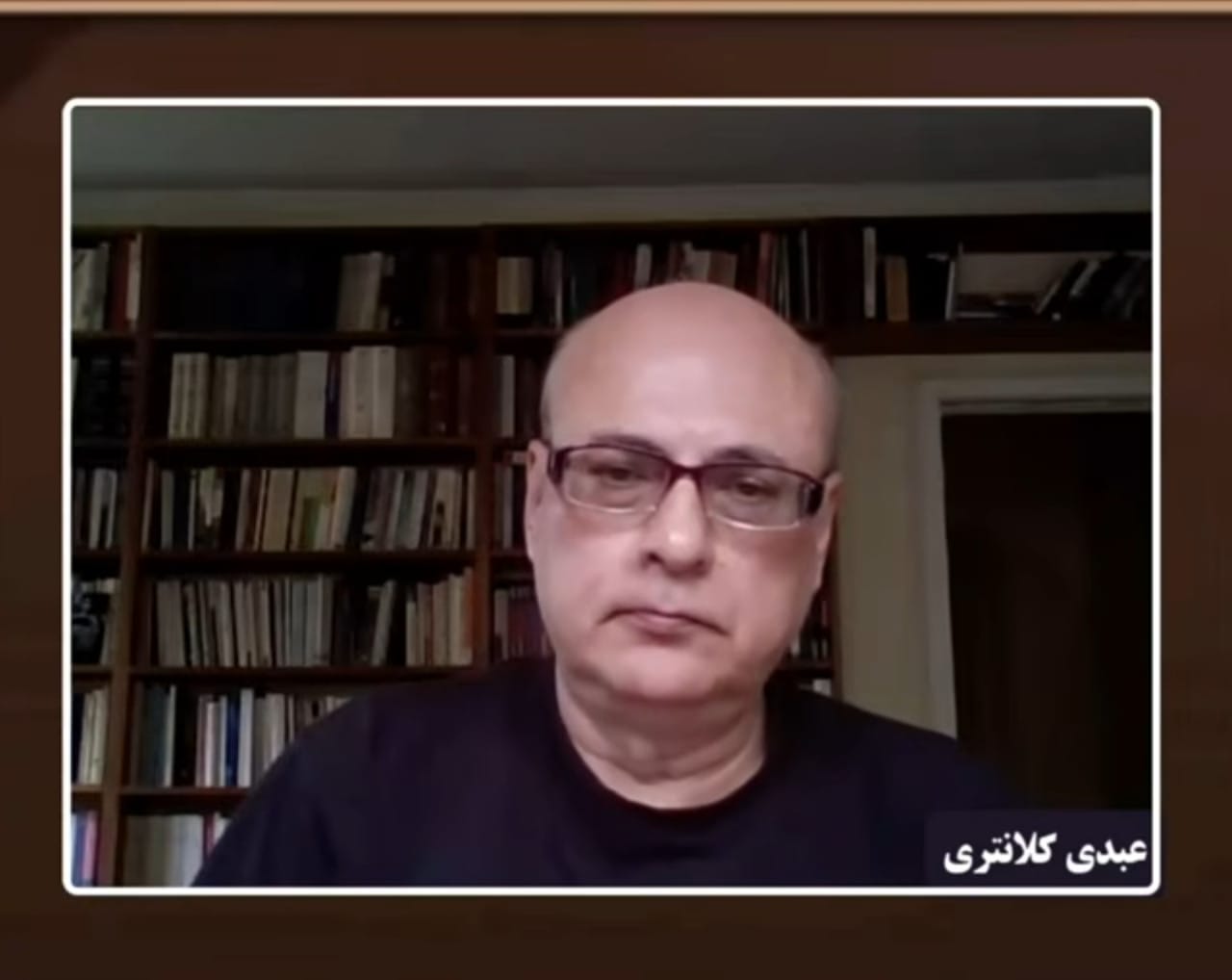
Abdee Kalantari:
First, I want to reinforce something Siyavash said earlier: our subject-position, meaning whether we are inside or outside the country, changes the situation to some extent.
If we are outside Iran, say I’m in the United States and you’re in Canada, then the slogan “No to War” has concrete meaning. We can pressure the governments we live under and demand that they stop the war.
But if you are inside Iran, the slogan “No to War” by itself is not enough. Immediately the issue of defense arises. And inevitably some force, usually the central state, takes responsibility for that defense.
And this is where the tragic situation Siyavash described emerges: the force conducting the defense is itself the same force that inflicted terrible suffering on its own people.
That makes things extremely difficult for people who identify as leftists or Marxists. Supporting such a structure becomes morally and politically painful.
Yet sometimes it is also unavoidable. What exactly are you supposed to do? Surrender? That is not really an option either. In the end, this may still be a colonial war, or at least a war with colonial dimensions.
“The ‘Resistance Axis Left’ Is Only Left on One Issue”
But regarding “resistance” itself: the so-called Resistance Axis Left is only “left” in one narrow sense, its opposition to global superpowers.
Otherwise, the kind of left that Siyavash and I identify with is fundamentally anti-capitalist. It opposes exploitation of workers and marginalized classes. It opposes every form of discrimination institutionalized by the Islamic Republic.
And the Islamic Republic embodies virtually every form of reactionary politics imaginable. It is a rentier capitalist system. It divides people into insiders and outsiders. It governs through systematic repression and discrimination. It imposes gender apartheid.
On all of these issues, the “Resistance Axis Left” is not left-wing at all. In fact, it is deeply conservative, often more reactionary than the traditional right itself. We have seen this clearly in how it defends the regime.
Gaza and International Legitimacy
However, in the international geopolitical arena, especially after the genocide in Gaza, parts of the global left and the Resistance Axis Left gained a certain legitimacy for themselves because they stood behind Palestinian resistance.
But if we step slightly away from the phrase “Resistance Axis Left,” we can ask a deeper question: what exactly is the “Axis of Resistance”? And beyond that, what does “resistance” itself actually mean?
I don’t remember exactly when the phrase “Axis of Resistance” emerged, but I think it was largely a response to George W. Bush’s phrase “Axis of Evil,” which he used before the invasion of Iraq to describe Iraq, Iran, and North Korea.
Those were supposedly the “evil” states.
In response to that war-oriented framing, a regional bloc gradually formed and called itself the “Axis of Resistance.”
Resistance in the Classical Sense
But traditionally, “resistance” meant something much more specific.
Historically, resistance is usually defined within a colonial relationship. It refers to national liberation struggles against colonial domination.
The classic example is Vietnam resisting American colonial aggression. Or today, Palestinian resistance against Israeli settler colonialism. Or Kurdish resistance, since Kurds are divided across several states and confront forms of colonial domination in each.
But Iran is not in that kind of position.
The Islamic Republic cannot really describe its foreign policy as “resistance” in the classical anti-colonial sense, because Iran already achieved political independence through the 1979 Revolution.
Remember the original revolutionary slogans: “Independence, Freedom, Social Justice.”
The Islamic Republic destroyed the last two. In fact, it even altered the slogan itself into “Independence, Freedom, Islamic Republic.” Once the theocratic structure consolidated power, freedom and social justice were pushed aside almost immediately.
But independence, at least in a certain sense, was achieved.
The Shah, Dependency, and the Revolution
Why do we say independence was achieved?
Because although the Shah’s regime was not literally a colony, it had characteristics of dependency. It came to power after a coup against a nationalist movement that sought to nationalize Iranian oil. It opened the country widely to American military advisers, somewhere between fifty and a hundred thousand of them.
This fit directly into the Kissinger Doctrine during the Nixon era in the mid-1970s: instead of direct American intervention everywhere, Washington would arm regional gendarmes to the teeth and allow them to police the region on America’s behalf.
In that sense, the Shah’s regime could perhaps be described as semi-dependent or semi-colonial.
But after the revolution, Iran was no longer in that position.
“This Is Not Anti-Colonial Resistance”
So the Islamic Republic is not a colonized state whose regional policies can automatically be called “resistance.”
No.
The regime’s real objective was to expand and entrench its own theocratic model throughout the region, especially against Israel. And from the very beginning, not merely during Ahmadinejad’s era, its declared goal included the destruction of Israel itself.
The vision was explicit: moving through Iraq toward Jerusalem, eventually “liberating” it. The nuclear program developed within that broader framework. And in the early 2000s there were even indications that the regime sought nuclear weapons capabilities, until aspects of that program were exposed and partially abandoned.
So we really cannot simply say that everything the Islamic Republic has done regionally qualifies as anti-colonial resistance.
And by extension, we cannot automatically conclude that the “Resistance Axis Left,” by supporting the Islamic Republic, is therefore engaged in a genuine anti-colonial struggle.
It’s not that simple.
Amir Payam:
Yes, let me clarify something. In my previous question, and in what I’m asking now, I’m trying to present the worldview of the so-called Resistance Axis as accurately as possible. I personally do not agree with it at all. But I need to lay out the argument clearly in order to hear your response.
Mr. Shahabi, let’s continue with that framework.
Their argument is that the Islamic Republic intervened in Syria and pushed back ISIS, supported the Palestinian struggle, especially Hamas, improved the situation of Shi’a communities in Lebanon, and confronted what they describe as the “cancerous entity” of Israel, I’m using their terminology here.
They argue that all of this required coordinated regional action, including the nuclear program and related policies. So let me try to close this part of the discussion before we move to your concluding remarks.
From this perspective, how should one respond to the claim that figures like Qassem Soleimani implemented policies in Iraq and Syria that ultimately played a positive role in the region?
How would you explain or challenge that narrative?
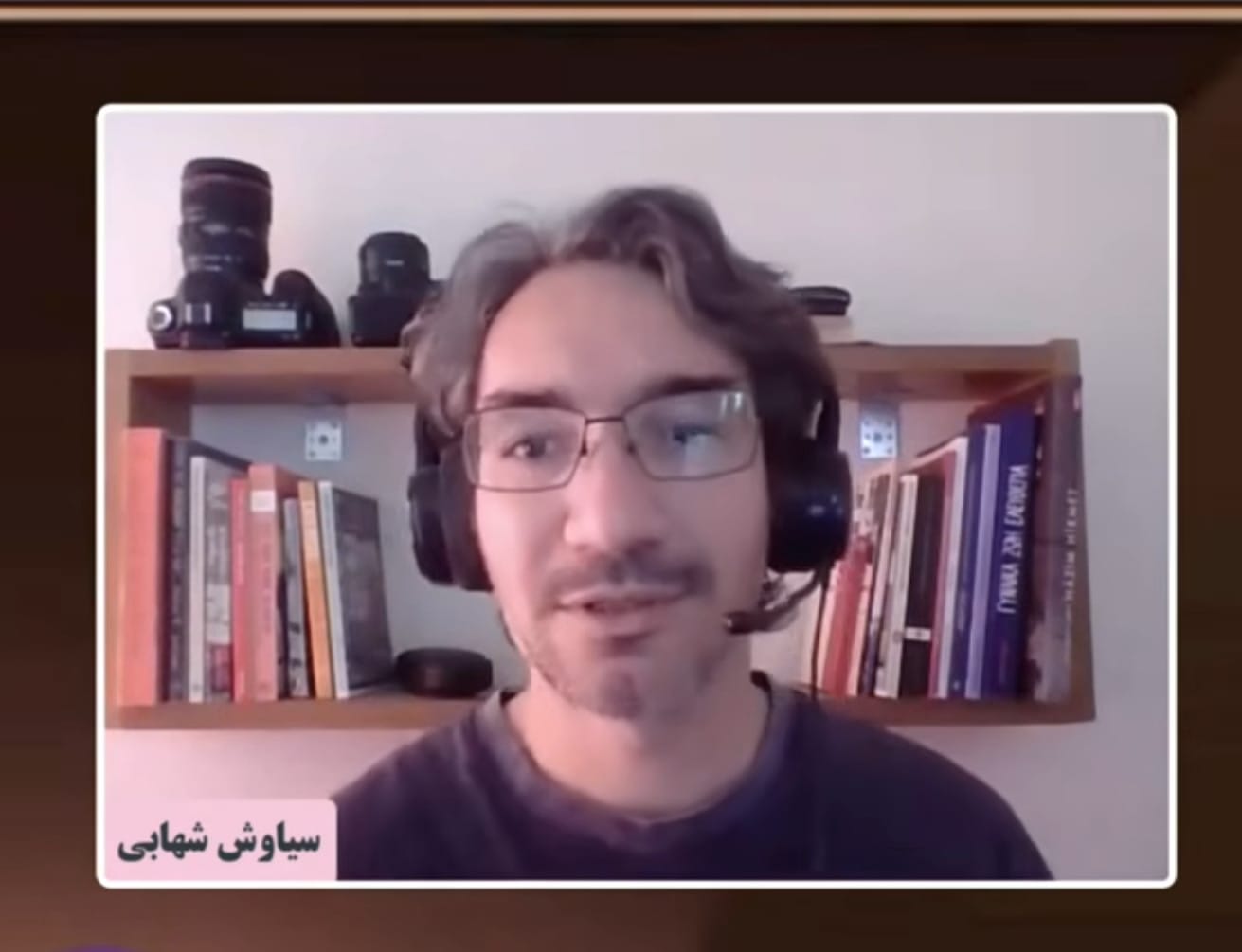
Siyavash Shahabi:
Positive role? They devastated the region. What positive role are we even talking about?
They practically erased the Palestinian question from the table!
What exactly did they defend?
Personally, as someone who has spent years as a refugee in Europe, I’ve constantly had to argue with a very colonial, Orientalist current within the European left itself, people who still think of themselves as progressive while defending regimes like the Islamic Republic under the banner of “resistance.”
The argument is always the same: “What exactly is this regime doing that you call resistance? How is it defending Palestine?”
In reality, they hollowed out the Palestinian cause. What did they actually add to it?
Before 1979
We need to go back to the period before the 1979 Revolution.
Even under the Shah, Iran was already expanding its military sphere of influence. It wasn’t merely functioning as a passive “gendarme” for the West. By the later years of his rule, the Shah was trying to become more independent, not fully independent, but moving in that direction.
Iran had become enormously wealthy through oil. That wealth gave the Shah a sense of international power. Remember his famous arrogance toward the West, saying in effect: “You blue-eyed people can’t order us around anymore.”
So this process didn’t begin only with the Islamic Republic.
Even the Iran-Iraq War was partly aimed at weakening that emerging regional role. But the war also had other consequences. One of them was consolidating the Islamic Republic itself, alongside the export of revolutionary Shi’ism and what they called the expansion of the Islamic Revolution.
How the Islamic Republic Strengthened the Israeli Far Right
But one of the most damaging consequences of this strategy, especially regarding Israel and Palestine, was that it strengthened far-right Islamist movements across the region, which in turn strengthened the far right inside Israel itself.
Yes, Israeli occupation is real. The theft of Palestinian land and water is real. All of that is undeniable.
But let’s ask honestly: what positive effect did the Islamic Republic’s policies actually have on that situation?
Almost none.
Step by step, Palestinians lost ground.
In the West Bank, what remains today are tiny disconnected islands of villages. Even what little existed before is disappearing. And ultimately, these regional strategies helped produce the catastrophe we now see in Gaza, this genocide.
Iran’s Geopolitical Position
I want to say something very clearly.
Because of its geography and history, Iran occupies a unique position in the world. Unlike many countries, Iran actually has the ability to choose its alignments. It can decide which global bloc to lean toward. That is a rare advantage.
Most countries do not have that flexibility. Iran does.
Now, that doesn’t mean Iran can become a superpower. But it also doesn’t mean it must become someone else’s subordinate. It can maintain a degree of independence.
At least in theory.
“China and Russia Milked Iran Dry”
But over the past three decades, China and Russia have also exploited Iran heavily.
In fact, the relationship itself has often been exploitative.
Look at China’s oil deals with Iran. Honestly, if the United States directly seized Iran’s oil fields tomorrow, I doubt it would buy Iranian oil at prices as low as China currently pays. China purchases Iranian oil at enormous discounts.
So the question becomes: at what price?
People say Iran is defending Palestine. Fine. But at what cost? Especially given what has actually happened to Palestinians themselves.
I even remember Palestinian students who came to study in Iran. After a certain point, the regime refused to let them remain in the country. They were expelled and told to leave. But they couldn’t safely return to Gaza or the West Bank either, so they became displaced yet again in other countries.
The regime would not even allow them to stay in Iran.
“Where Are China and Russia Now?”
And now look at the current war.
Where is China?
What exactly has Russia done?
People say: “Well, they offered some assistance.” But that’s not a real answer.
No major Chinese companies were ever willing to seriously risk sanctions or challenge the Western banking system by investing meaningfully in Iran. They simply didn’t.
Yes, there were some limited infrastructure projects, rail development and things like that. But that’s minor compared to what could have happened.
So when people say, “Iran is courageously fighting America,” I increasingly feel this is a constructed image, one produced largely within sections of the Western diaspora itself, among the very same resistance-oriented circles living comfortably in the West.
It’s the mindset of the ideological Basiji living abroad, the one who frames everything through opposition to Trump while perhaps quietly aligning with someone like Obama. It’s the same political tendency people like Trita Parsi often represent.
From that perspective, I understand how the image emerges: “Iran versus the Empire.”
But from the perspective of Iranian society itself, the question becomes much simpler:
If China gives us nothing meaningful, and Russia gives us nothing meaningful, then why are we endlessly fighting America on behalf of this geopolitical fantasy?
China and Russia are far stronger powers than Iran anyway.
And the ironic part is that China sees both Russia and Iran as components of its own strategic bloc, yet somehow we are always the ones expected to absorb the blows while others enjoy the benefits, the development, the stability, the profits.
That too is a kind of answer.
Amir Payam:
To bring the discussion toward a conclusion, I’d like to ask both of you for a final summary.
Mr. Kalantari, at the beginning of the program you mentioned the question of cost. On one side, part of the right-wing opposition, especially the monarchists around Reza Pahlavi, basically says: “Bomb harder, destroy more, so that we can come to power.”
On the other side, there are those identified with the “Resistance Axis Left,” who argue that this defense is necessary, even sacred, however they choose to define it.
You also mentioned the existence of a third front.
Some people are inside the country, some outside. Communications with Iran are almost completely cut off. Social movements are under severe repression. We once had the “Woman, Life, Freedom” movement, and now we barely even know what condition it’s in.
So what exactly is this third front? A position that rejects both the monarchist right and those who have effectively taken refuge in defending the Islamic Republic.
For someone listening to this program and asking, “What am I supposed to do now?”, what is the best path forward, at least from your perspective? What does this third front actually look like?
Mr. Kalantari, please go ahead.
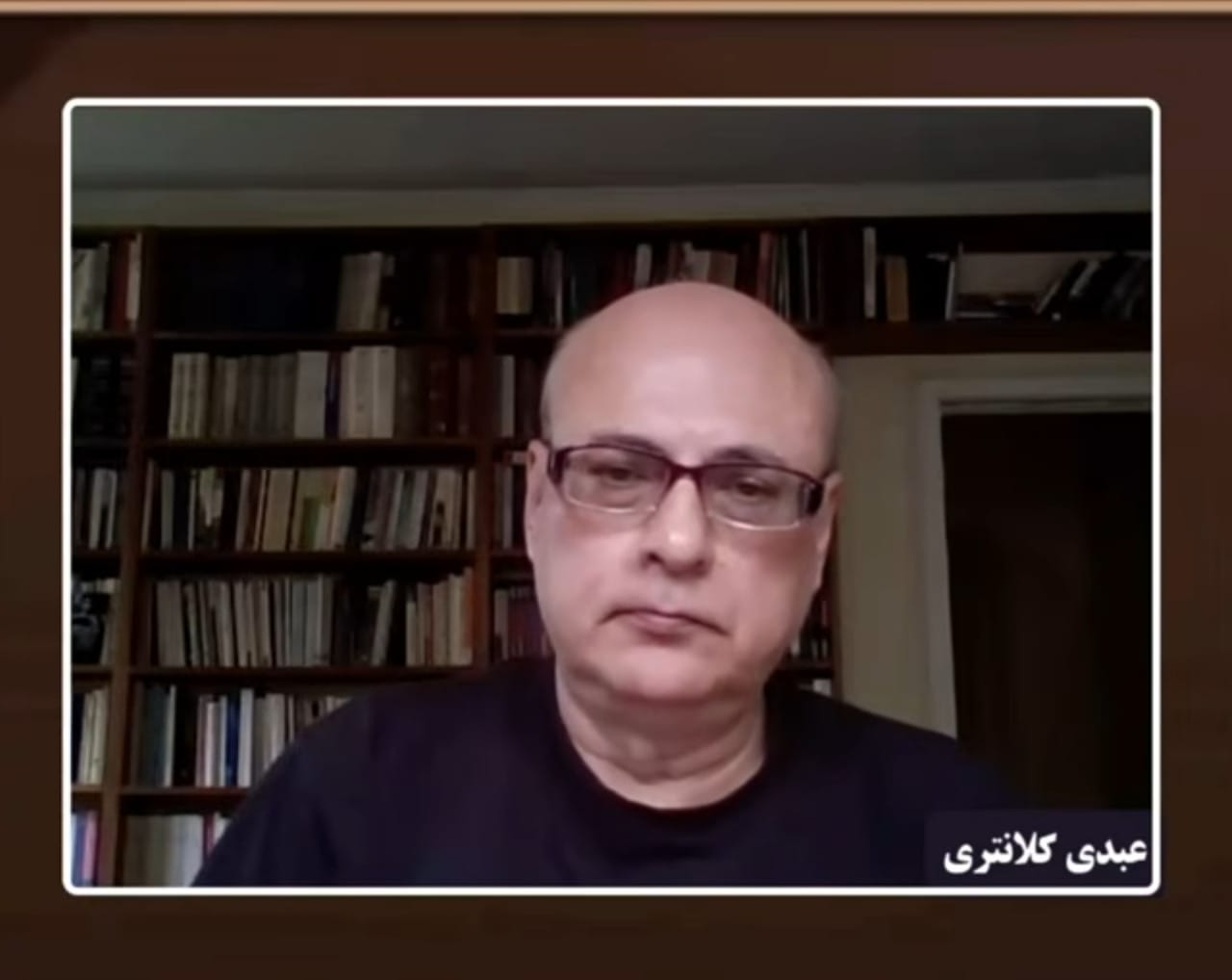
Abdee Kalantari:
At this point, we still don’t know under what conditions this war will eventually end.
So the immediate task is not really to define our political identity in abstract terms, but rather to ask: what conditions are most likely to lead to the end of the war with the least destruction?
But once we emerge from this catastrophe, we already possess an important historical experience, the experience of the 1979 Revolution itself.
During the revolution, Iran’s secular left, which was not religious, effectively had no choice but to participate because revolutionary conditions had overtaken society. But in the course of the revolution, secular left forces lost ground to Islamism. In the final months, Ayatollah Khomeini’s hegemony became consolidated.
At the time, many people still held illusions about political Islam. There was a belief that after overthrowing the Shah, perhaps these forces could create some combination of freedom and social justice, perhaps even open space for a secular left afterward.
But both experience and history proved that to be an illusion.
The Historical Roots of Political Islam
And to reinforce Siyavash’s earlier point about looking backward historically, we can go even further back than the Shah’s period, all the way to the Constitutional Revolution.
We can trace the roots of this kind of Islamism in figures like Sheikh Fazlollah Nouri and similar currents. Later, after the collapse of the Ottoman Empire and the broader crisis produced by defeats at the hands of the West, Islamist movements expanded across the region, the Muslim Brotherhood in Egypt, Jamal al-Din Asadabadi’s influence, and later movements like Fada’iyan-e Islam in Iran.
So we’ve learned something historically from all this:
These movements are not merely anti-colonial.
Even when they do oppose colonial domination, anti-colonialism is only one aspect of them. Their deeper orientation is often opposition to modernity itself, hostility not merely toward Western political domination, but toward secularism, women’s liberation, individual freedoms, and modern social life in general.
“We Must Not Repeat the Same Mistake”
And because we now possess that historical experience, we should not allow a new generation, one that understandably wants to defend the country against foreign aggression, to fall once again into the trap of political Islam.
And if this current calls itself “left,” then we should remember that the Islamic Republic is not anti-capitalist, not committed to women’s liberation, not committed to equality.
It embodies precisely the kinds of structures that any genuine left should oppose.
It is neither a system based on social justice nor genuinely anti-colonial. It is anti-Western, yes, but anti-Westernism is not automatically the same thing as anti-colonial politics in the leftist sense.
We should not repeat that mistake again.
Returning to the Real Social Struggle
The younger generation of the Iranian left needs to remember that once peace is restored, it must return to its own terrain of struggle.
It must continue the real conflict I mentioned earlier, the ongoing conflict between civil society and the state.
That conflict never disappears.
Even if a political revolution one day topples the regime, the struggle itself will continue as long as capitalism continues to exist.
That tension, that social antagonism, is permanent.
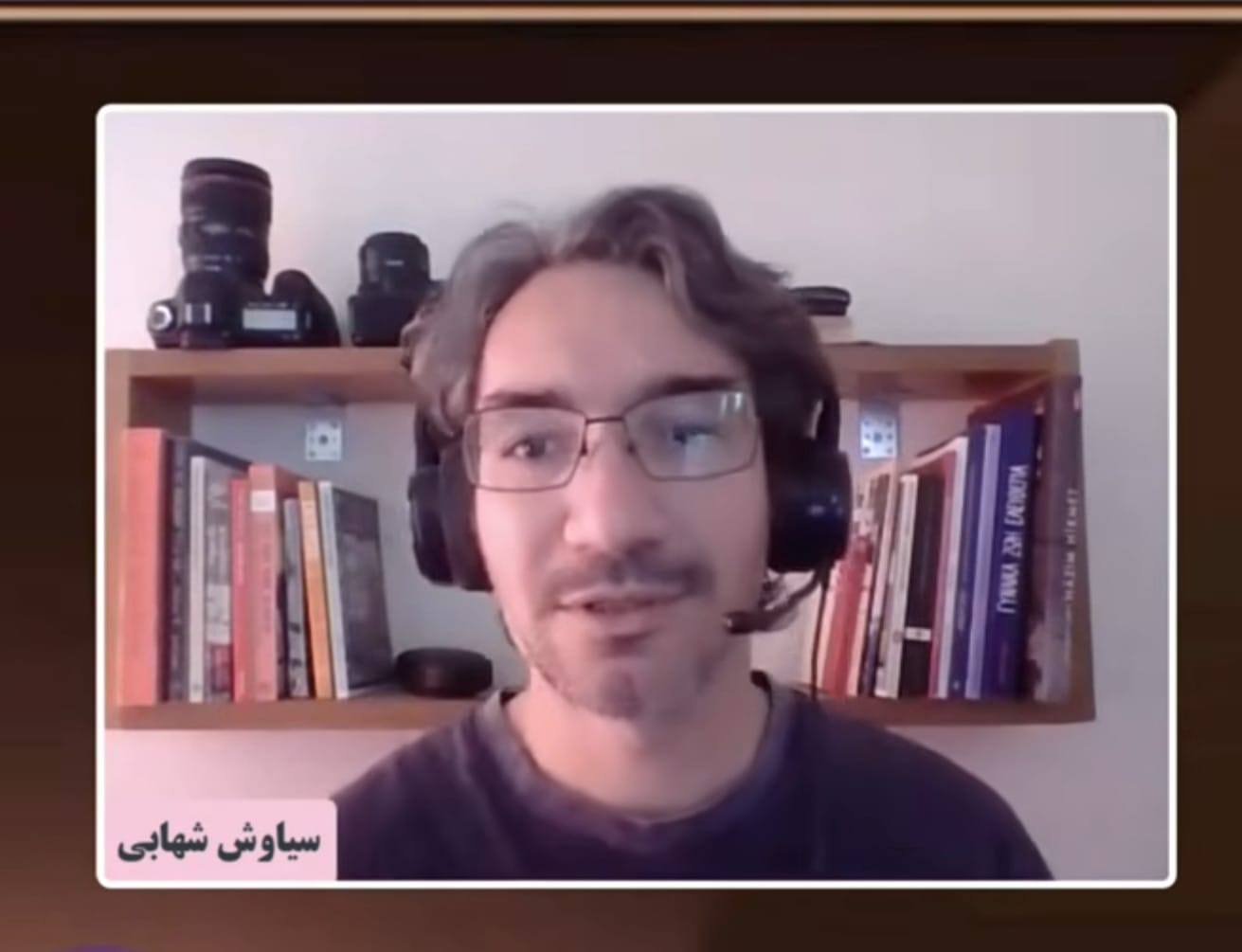
Siyavash Shahabi:
I think the key issue is learning to read Iran “from below,” from labor, from children’s rights, from prisons, from schools, from the water crisis, from unemployment.
Right now we are facing two deeply antagonistic forces inside Iran, forces that increasingly seem incapable of continuing to coexist. That reality existed before this war, before last summer’s earlier conflict, and it’s even clearer now. We’ve entered a stage where coexistence within the existing framework is becoming impossible.
The war has provided the regime with a useful propaganda environment. It now tries to project a highly distorted and fabricated image of itself. They even launched a website claiming that thirty million people have registered as volunteer “martyrs.”
Well, if you really have thirty million volunteers ready to sacrifice themselves, then why is the internet shut down?
Because the internet is what connects Iranians horizontally to one another. It creates society. It allows social relations to spread and deepen across the country.
The Kurdish Social Strikes
I want to mention the extremely valuable experience of the social strikes in Kurdistan, especially the most recent wave during the January protests, which was broader than before and actually influenced other Iranian cities as well.
When society begins connecting horizontally like this, when people influence each other directly, exchange experiences, learn from one another, and discover common ground, the Islamic Republic will eventually have no choice but to confront that reality.
And what we are seeing now is that the regime is preparing itself once again for renewed repression, essentially returning to the same old strategy.
Because it cannot imagine anything else.
Its worldview fundamentally rejects citizenship. It does not recognize Iranian people as citizens and never truly has. And that confrontation, the confrontation between society and the state, is only going to intensify.
“Ideas Are Already Being Created Inside Society”
So the issue is not whether a Siyavash or someone else sitting somewhere comes up with a grand theory or a ready-made solution.
No.
These ideas are already being created inside society itself. They are being formed every day, in different ways, through lived experience, and they continue finding paths forward.
Over the last twenty or thirty years, society has repeatedly done exactly that. It has continually invented new forms of survival, organization, and resistance.
Your question reminds me of the standard questions always directed at opposition figures and political parties, especially well-known personalities abroad. And honestly, I don’t think the answer can really be given in that traditional style.
I can’t simply say, “Well, the people will organize themselves,” and leave it at that. [laughs]
What I’m trying to say, in my own way, is that the contradictions and tensions inside Iranian society have become extremely intense, and nobody can predict exactly where things will lead.
One thing is certain: these contradictions will continue making governance harder and harder.
Fear of Another Massacre
Could the regime carry out another massacre of thousands?
Yes. That possibility absolutely exists, and some developments are genuinely alarming.
For example, when the head of Mossad openly says that they are “active” inside Iran, that is not merely a war against the Islamic Republic. That becomes a form of terror directed against Iranian society itself.
And that’s extremely dangerous.
Because we are dealing with a brutal regime that will immediately exploit such things. Tomorrow, if you defend children’s rights, they will accuse you of being linked to Mossad or America and continue the repression.
But at the same time, the contradictions inside a country of ninety million people, spread across more than fourteen hundred cities, have become too deep to suppress indefinitely through arrests, executions, and massacres alone.
Especially now, when the regime itself is wounded and weakened.
“New Social Cores Will Inevitably Form”
In a society this large, under an economy this damaged, new social and political nuclei will inevitably emerge inside the country.
They have no other choice. They must form themselves and begin acting.
And outside the country, the task should be continuing the work of exposure and building connections between local struggles inside Iran and local solidarity movements in the West.
That is, if we can also manage to break through the colonial, Orientalist mentality that still shapes so much Western understanding of Iran and the Middle East.
Closing Remarks
Amir Payam:
Excellent.
Our discussion today with Abdee Kalantari and Siyavash Shahabi focused on war and its consequences through the lens of the “Resistance Axis Left.”
Thank you to both of you, and thanks as well to everyone who followed this program.
Radio Payam is the only Persian-language radio program on Canada’s East Coast. It airs every Saturday from 2:30 to 4:30 PM Halifax time, corresponding to 10 PM in Tehran, on FM 88.1.
For more information and access to previous programs, please visit:
Radio Payam
Tune in to CKDU 88.1 FM every Saturday from 2:30 to 4:30 PM for Radio Payam with your host Amir. On air since 2009, Radio Payam is the only Farsi show on the East Coast.
We are dedicated to looking beyond headlines.
We bring the full story and context to you when it comes to news from Iran.